RiskCogs: building an anti-fraud, risk and KYC platform
We built RiskCogs as our anti-fraud, risk, and KYC product — including KYC built in the product itself. This case study covers the scoring architecture, shadow mode, and how we still integrate SEON, Onfido, and Veriff when a specialist SaaS fits better.
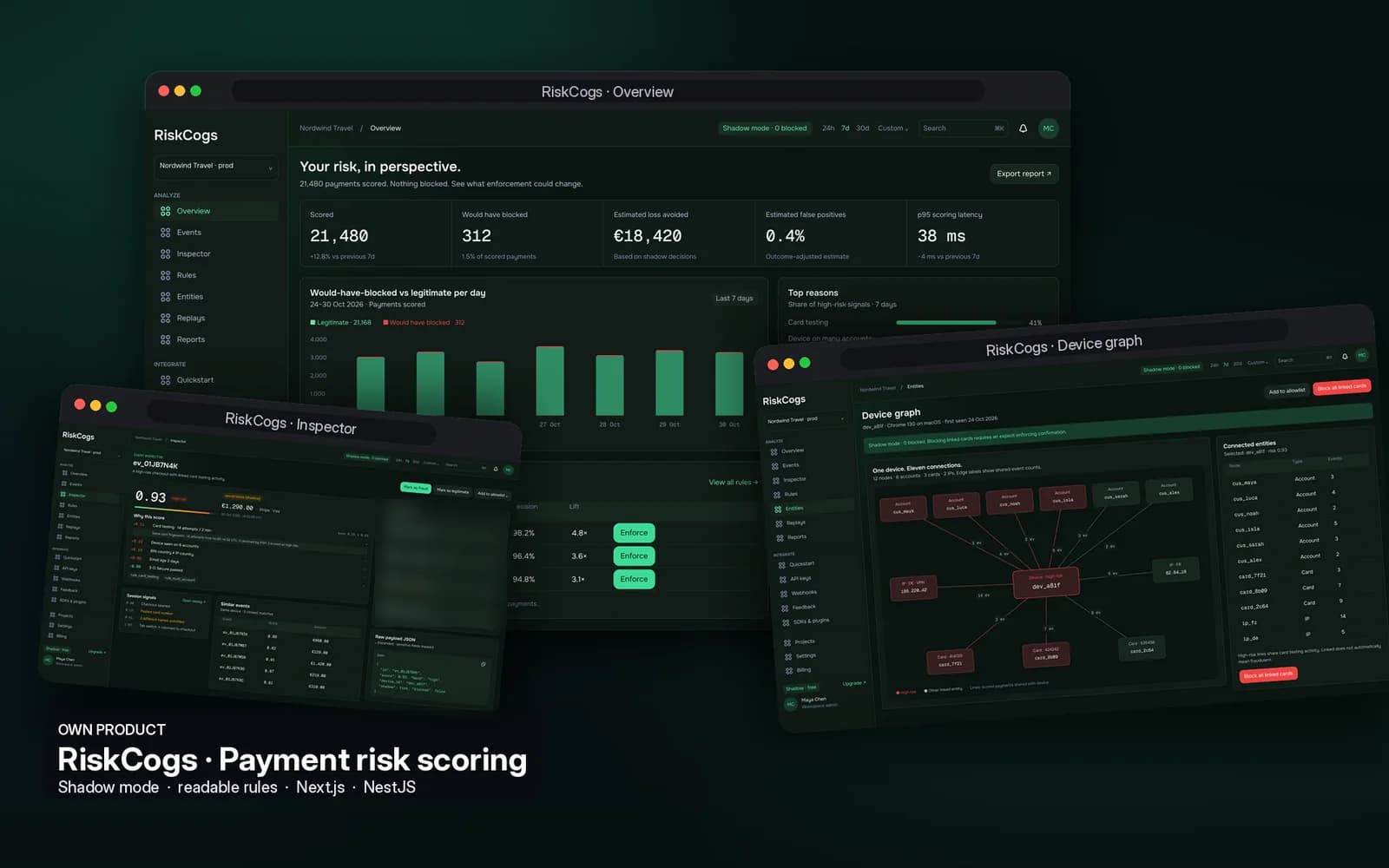
Why we built RiskCogs
Our payments work includes production integrations with anti-fraud and KYC tooling such as SEON, Onfido, and Veriff. On engagement after engagement we saw the same fracture: device signals in one dashboard, identity checks in another, PSP risk codes in a third inbox, and engineers wiring brittle glue so checkout could decide allow, review, or block.
RiskCogs collects those signals into one score, one band, and one recommendation, while your backend keeps the final call. It sits beside the PSP rather than replacing it — the public site shows Stripe, Adyen, Mollie, Checkout.com, and PayPal as typical neighbours. RiskCogs is also part of the OrsunPay product family as the anti-fraud module.
We position RiskCogs as anti-fraud, risk, and KYC software. KYC is being built in the product. We also integrate SEON, Onfido, and Veriff in production when a specialist identity vendor is the better fit for a tier or region.
What we built
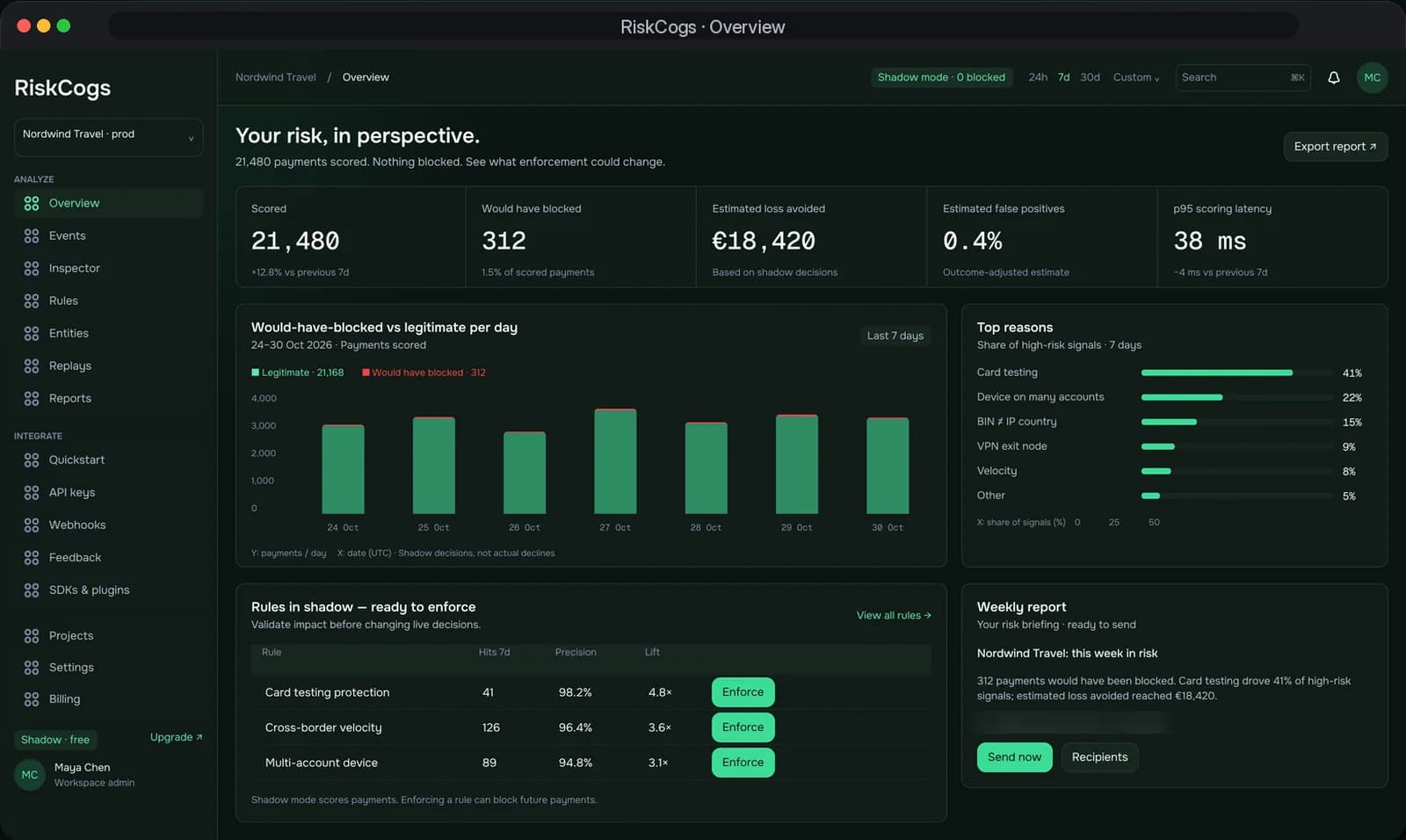
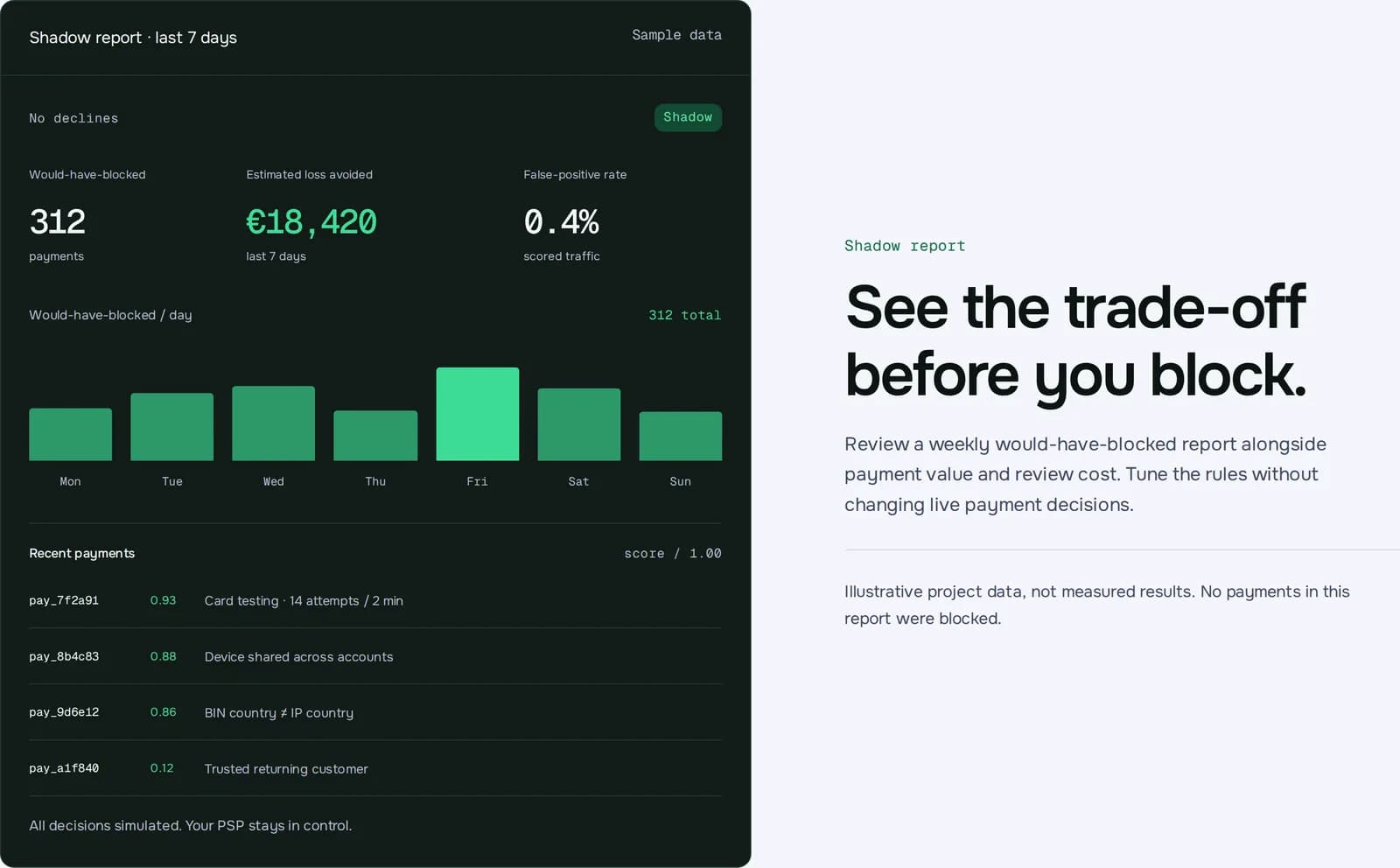
The product ships a browser SDK and a server API. Each evaluated session returns a risk score from 0 to 1, a low, medium, or high band, and a recommendation to allow, review, or block — your backend decides what to do with that output. Shadow mode scores live traffic without blocking anything, which is how new teams start for free.
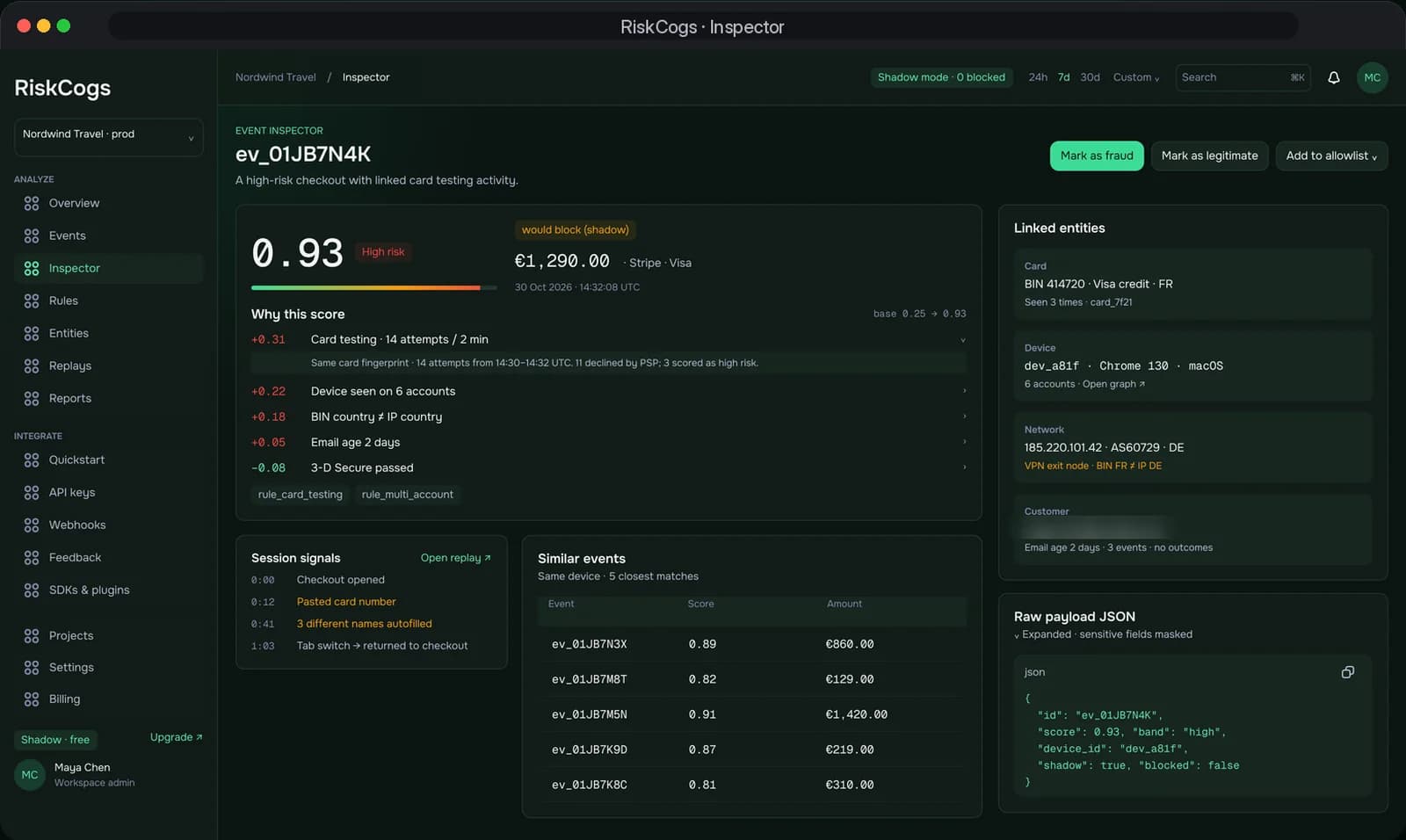
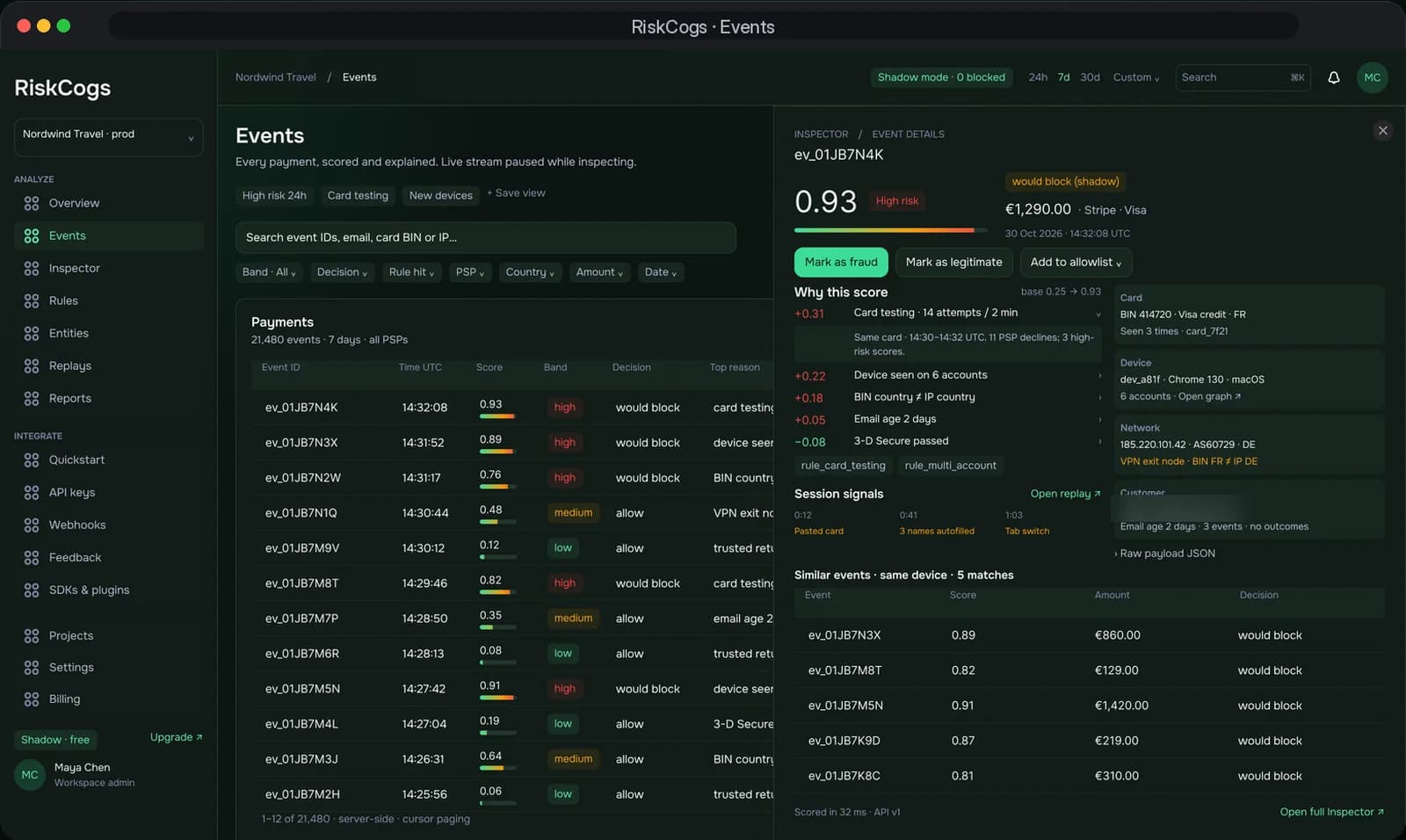
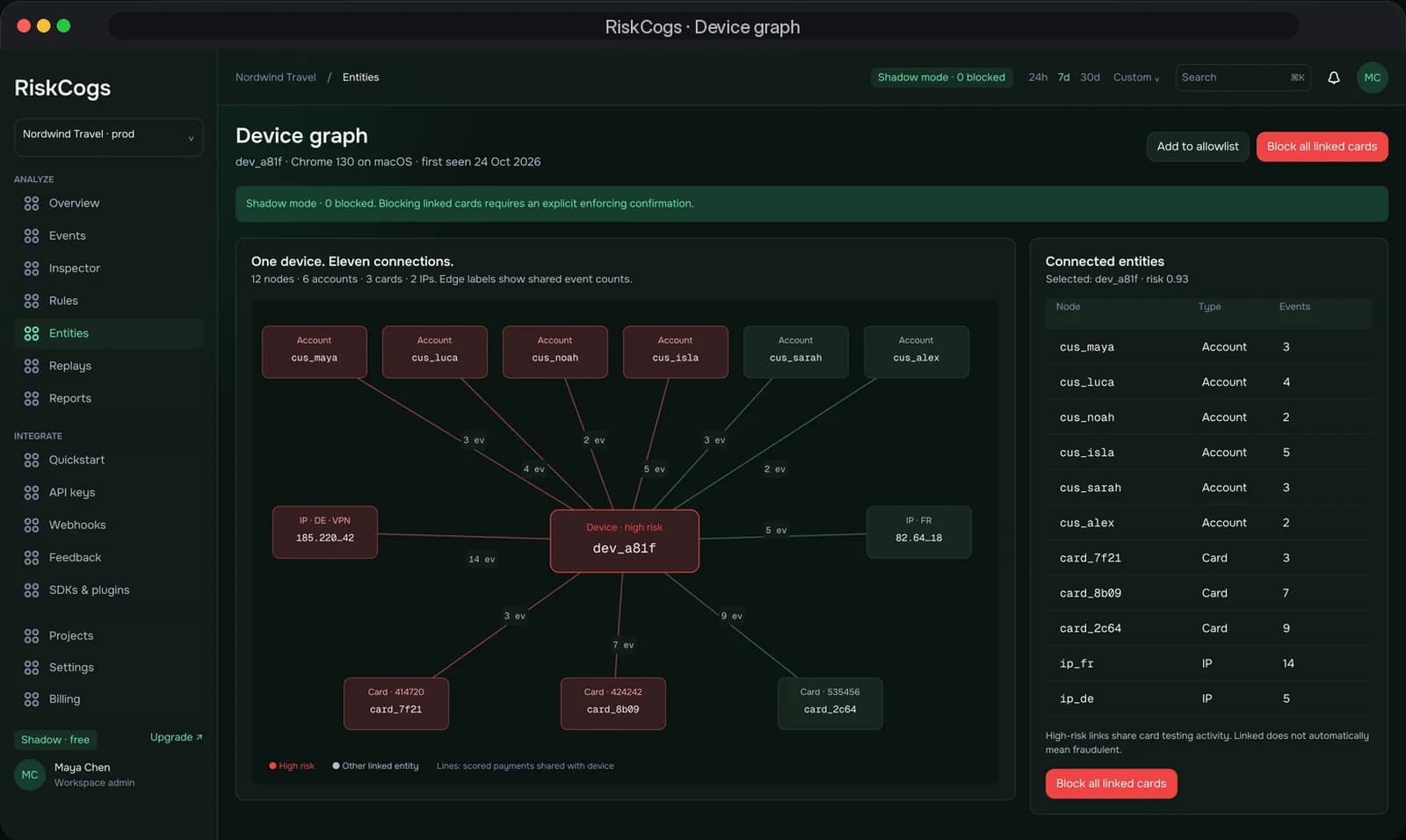
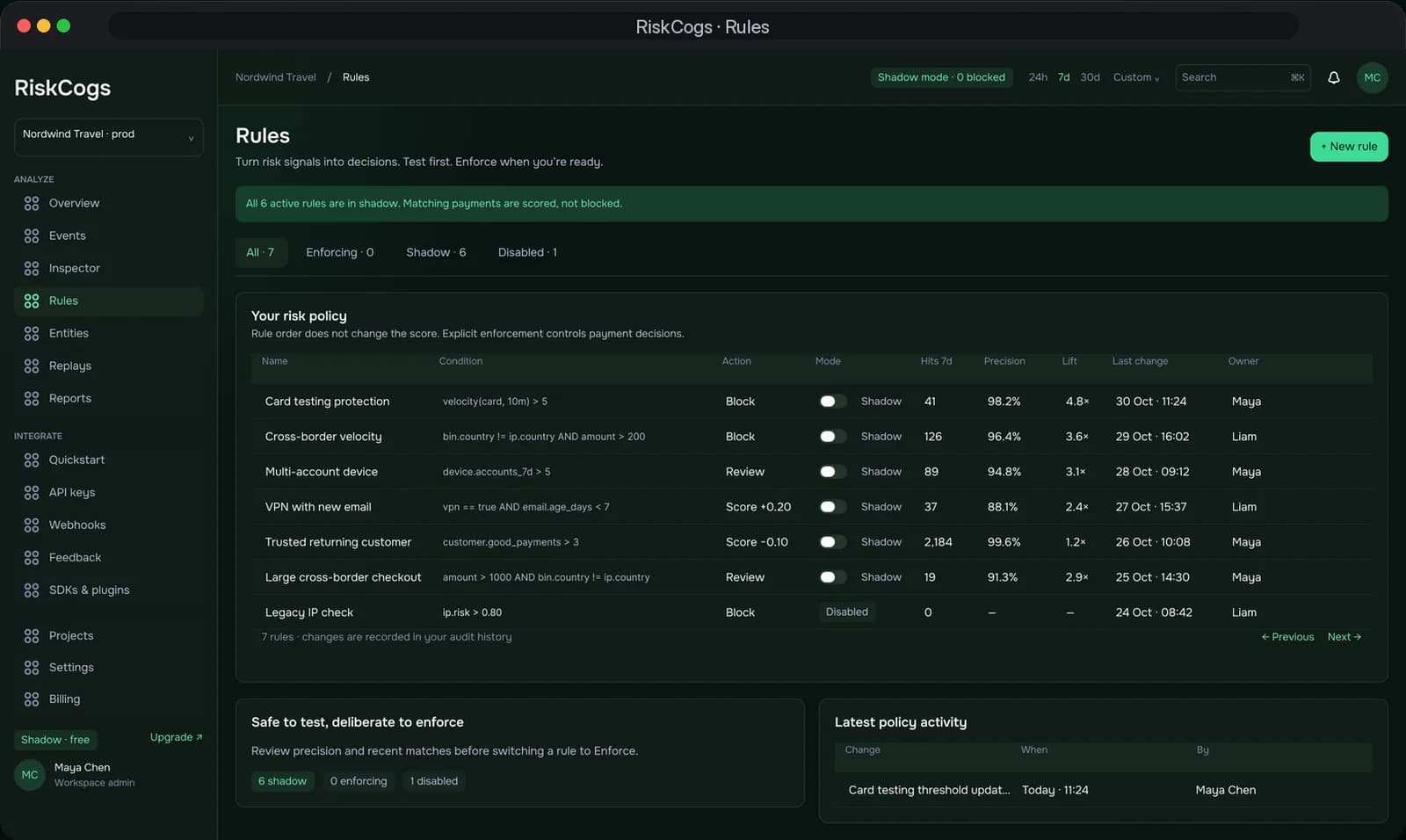
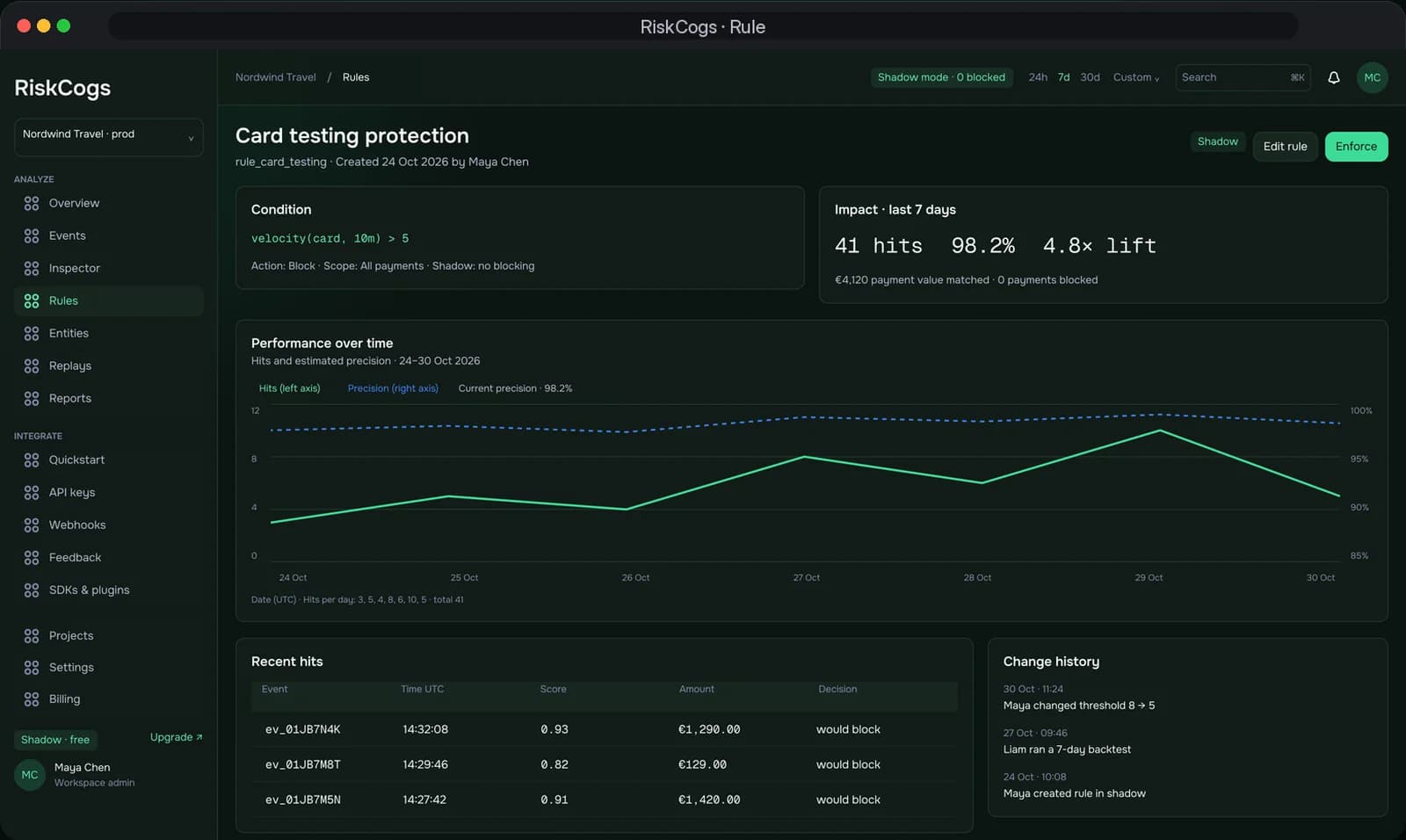
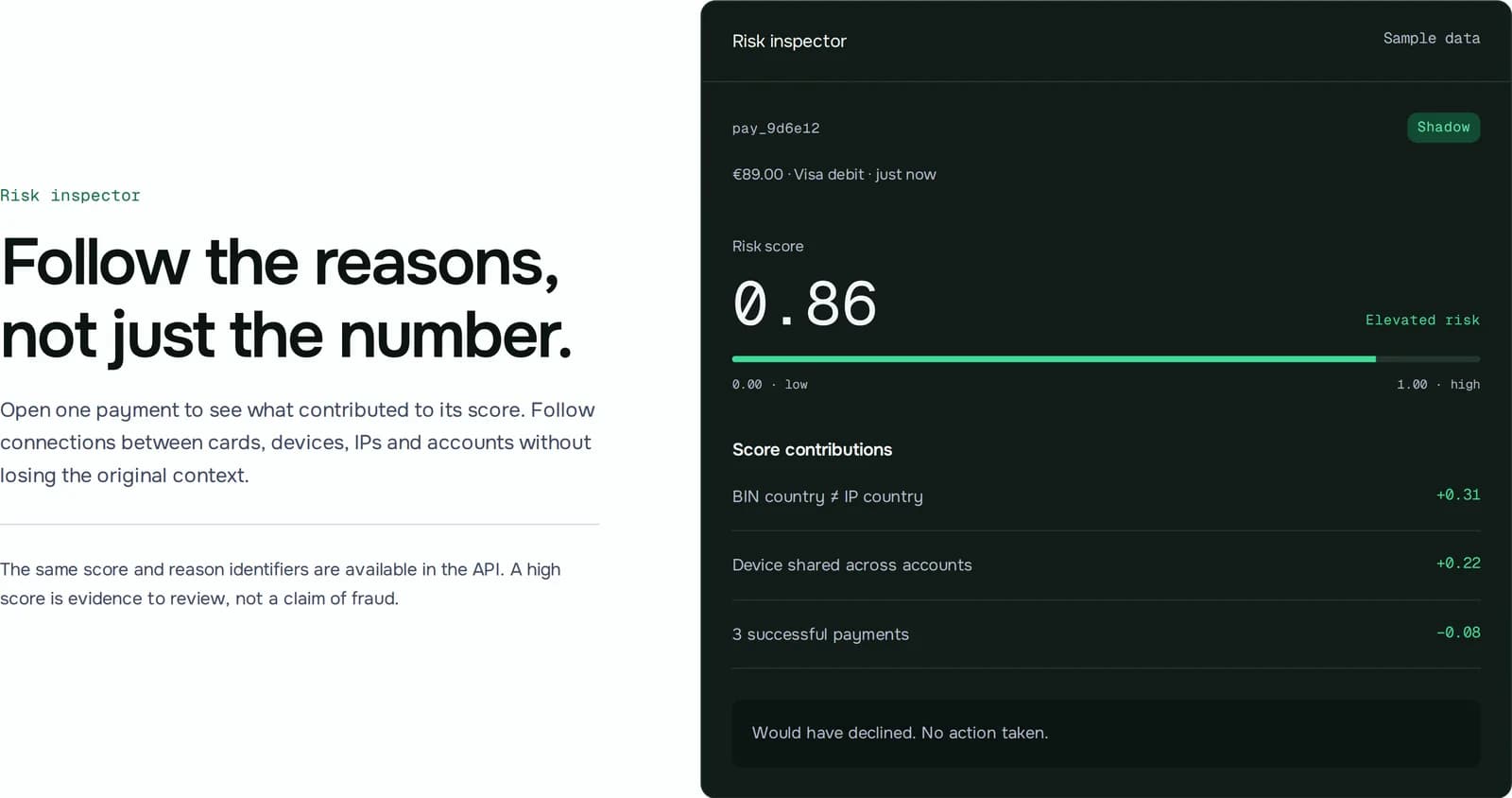
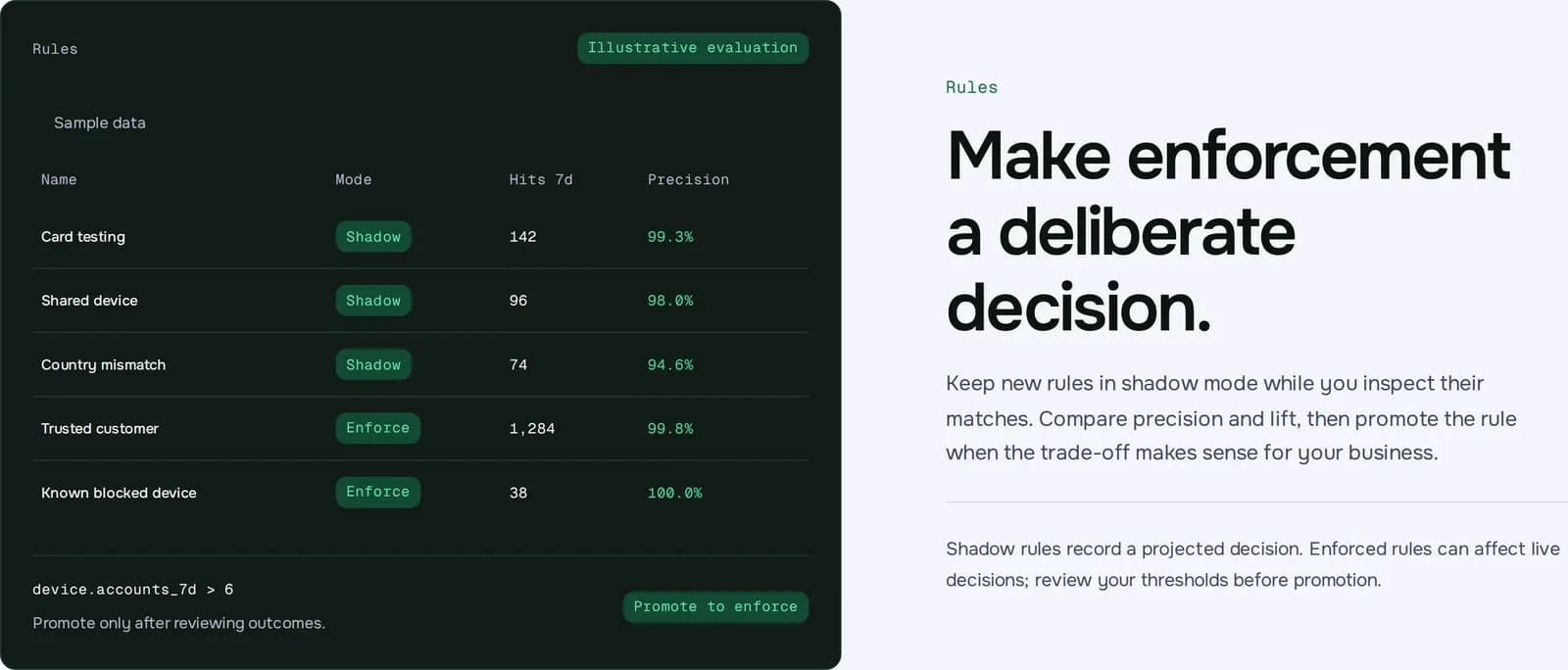
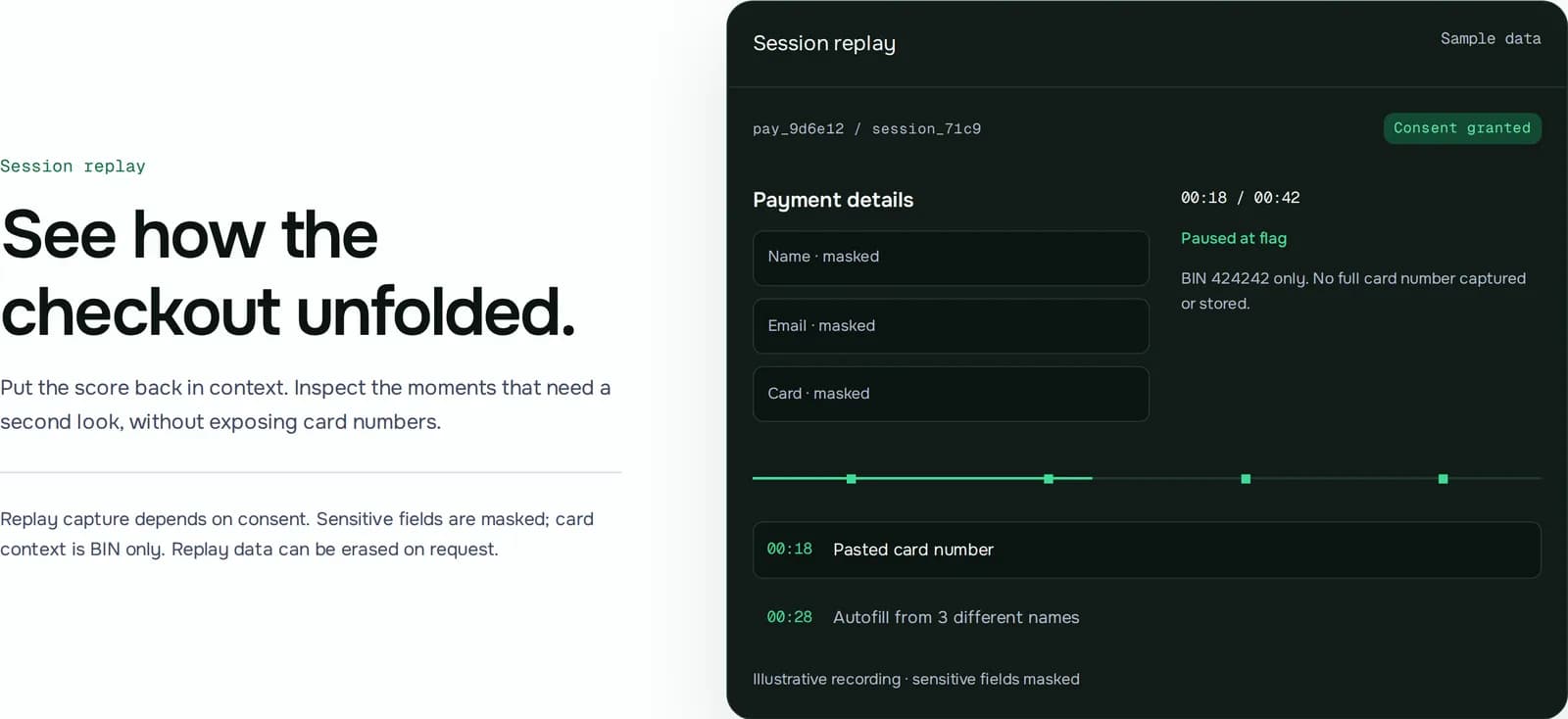
Operators get a shadow report, a risk inspector that explains score contributions, and a rules table where policies run in shadow before you deliberately promote them to enforce. The cabinet adds an events list, a device graph that links accounts, cards and IPs, and rule detail with change history. Session replay is available only with consent, and sensitive fields are masked in the recording. Webhooks and outcome feedback, including chargeback signals, close the loop so models and rules see what happened after the decision.
The merchant-facing cabinet and documentation live on the RiskCogs site, including the shadow quickstart in the public docs. SDK paths cover JavaScript, Node, PHP, and Python so backend and storefront teams can adopt the same contract.
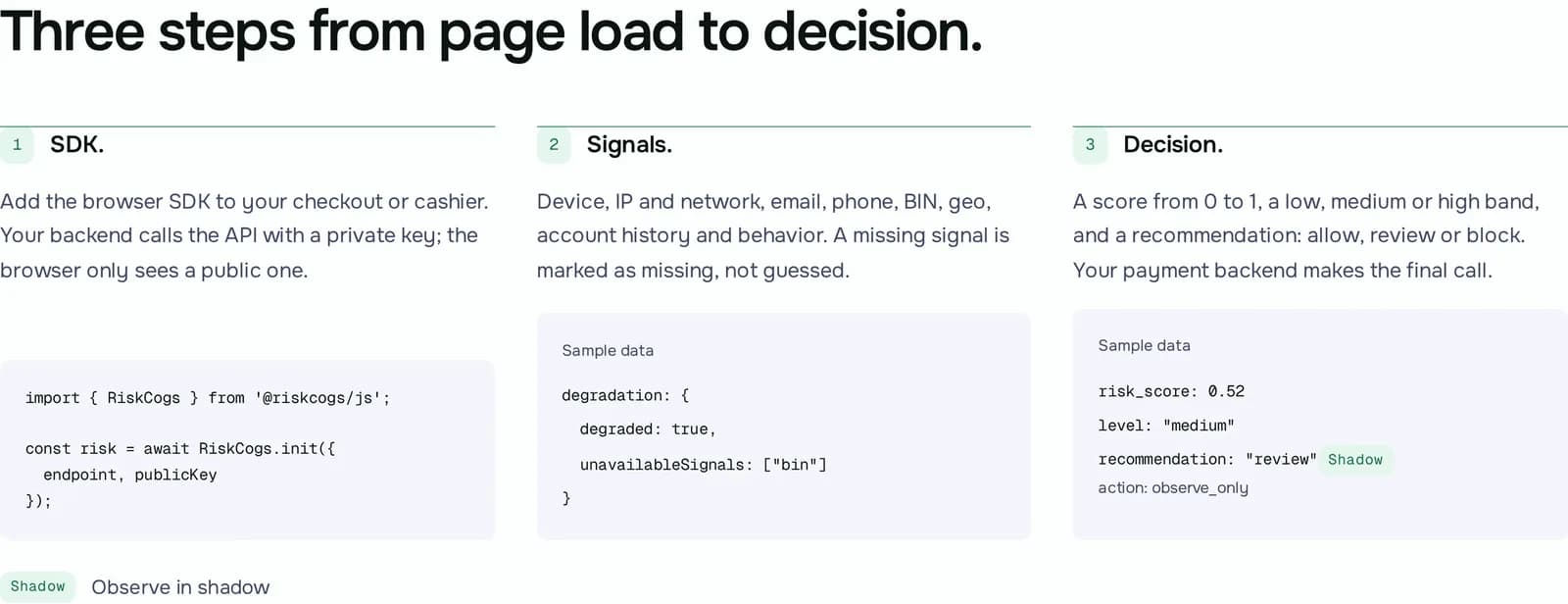
How a payment gets scored
Checkout loads the browser SDK, which gathers device and behavioural context according to your configuration. Your server calls the RiskCogs API with a private key and passes structured fields: IP and network metadata, email and phone hints, BIN data, geo signals, and account history where you store it. Missing signals are marked missing; the scorer does not invent values.
The API returns the score, band, and recommendation. Your application maps that to capture, 3DS step-up, manual review, or block. In shadow mode the same pipeline runs, but enforcement hooks stay disabled so you can compare the shadow report with actual outcomes. The event inspector in the cabinet walks through the same signal breakdown for a single payment. When a rule is ready, you promote it from shadow to enforce in the rules UI rather than flipping a global kill switch.
Privacy constraints are explicit: only BIN metadata is retained for cards, never full PANs. Session replay requires consent. Erasure and retention controls support GDPR requests, and a DPA is available on request. Those boundaries are part of the architecture, not an afterthought bolted on at sales time.
Product screens
The gallery mixes signed-in cabinet views with the public product site so you can see both operator workflows and shopper-facing copy.
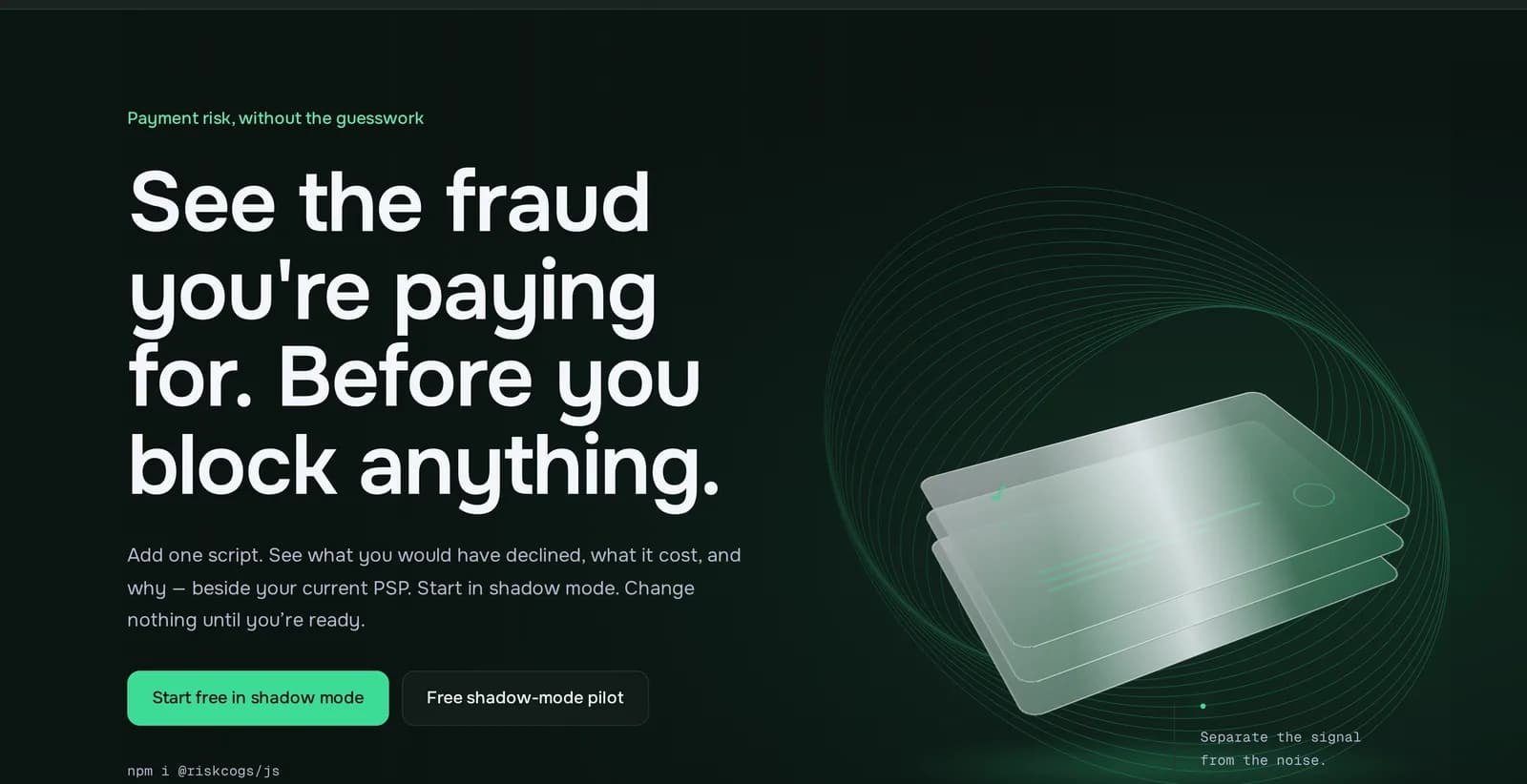
Where RiskCogs is today
RiskCogs is live on the RiskCogs site. New projects can start in shadow mode without blocking production traffic. Documentation and the quickstart guide are public, and the SDK surface covers JavaScript, Node, PHP, and Python.
The product is designed to run beside the PSP you already use. Marketing pages list Stripe, Adyen, Mollie, Checkout.com, and PayPal as reference integrations; your exact stack is configured per project. KYC is being built in the product alongside fraud and risk scoring.
Within Orsun Tech, RiskCogs connects to OrsunPay as the checkout-side anti-fraud module. Merchants evaluating orchestration and fraud together can read both product case studies and still engage us for neutral vendor selection.
How this shows up in our consulting
On payments risk and iGaming payments consulting we map fraud controls, KYC tiers, and chargeback handling in architecture memos. We recommend providers for the client's task, including competitors of our own products. When RiskCogs matches the signal mix and operating model, we model rules and shadow rollout in the memo; when SEON, Onfido, Veriff, or vendors such as Sift or Sumsub fit better, we document that trade-off explicitly.
Consulting delivers designs and integration briefs. We do not operate a 24/7 fraud review desk unless you scope implementation or retainer work separately. PCI certification and formal QSA engagements stay out of scope unless contracted on their own.
Production integration experience across PSPs and identity vendors feeds those memos. The KYC and anti-fraud stack note and payment integrations experience case on this site describe that context.
Questions about this practice
Related services and insights

Describe your problem
An independent technical answer for a round, an acquisition, or a decision you cannot delegate.
Limited to 3–5 engagements per quarter. Senior people on every engagement.
How an engagement runs
- First callYou describe the problem in your own words. We say whether we are the right people for it.
- Written scopeOne document with the outcome and the fee. Nothing starts until you have agreed to it.
- The workEach step ends in an artefact you can read and forward: a map, a memo, a plan.
- HandoverWe walk your team through the result and leave the documents with you.