OrsunPay: building a payment orchestration platform
We built OrsunPay as Orsun Tech's payment orchestration product. This case study walks through why we built it, how routing and cascading work in production, and how the same problems show up on payment orchestration consulting engagements.
Why we built OrsunPay
Dmytro Dudariev has worked on about a hundred payment integrations across his projects, including Stripe in production on several of them. Before and alongside OrsunPay, he also delivered three payment-orchestrator builds focused on routing, cascading, and provider connectivity. The pattern repeats: merchants keep several PSP contracts, yet their product team wants one integration surface, explicit routing rules, and a fallback path when a provider declines or times out.
Generic PSP dashboards rarely expose the cross-provider rules operators need. Commercial orchestrators such as Spreedly, IXOPAY, and Primer can fit, but we kept meeting teams that wanted ownership of the rule engine and the ability to plug in PSPs they already contracted. OrsunPay is Orsun Tech's own answer to that gap.
OrsunPay is a payment orchestration platform that connects you to licensed PSPs; it does not process or hold funds itself. We built it so routing, retries, and settlement context stay in one place while acquirers and processors remain separate relationships for the merchant.
What we built
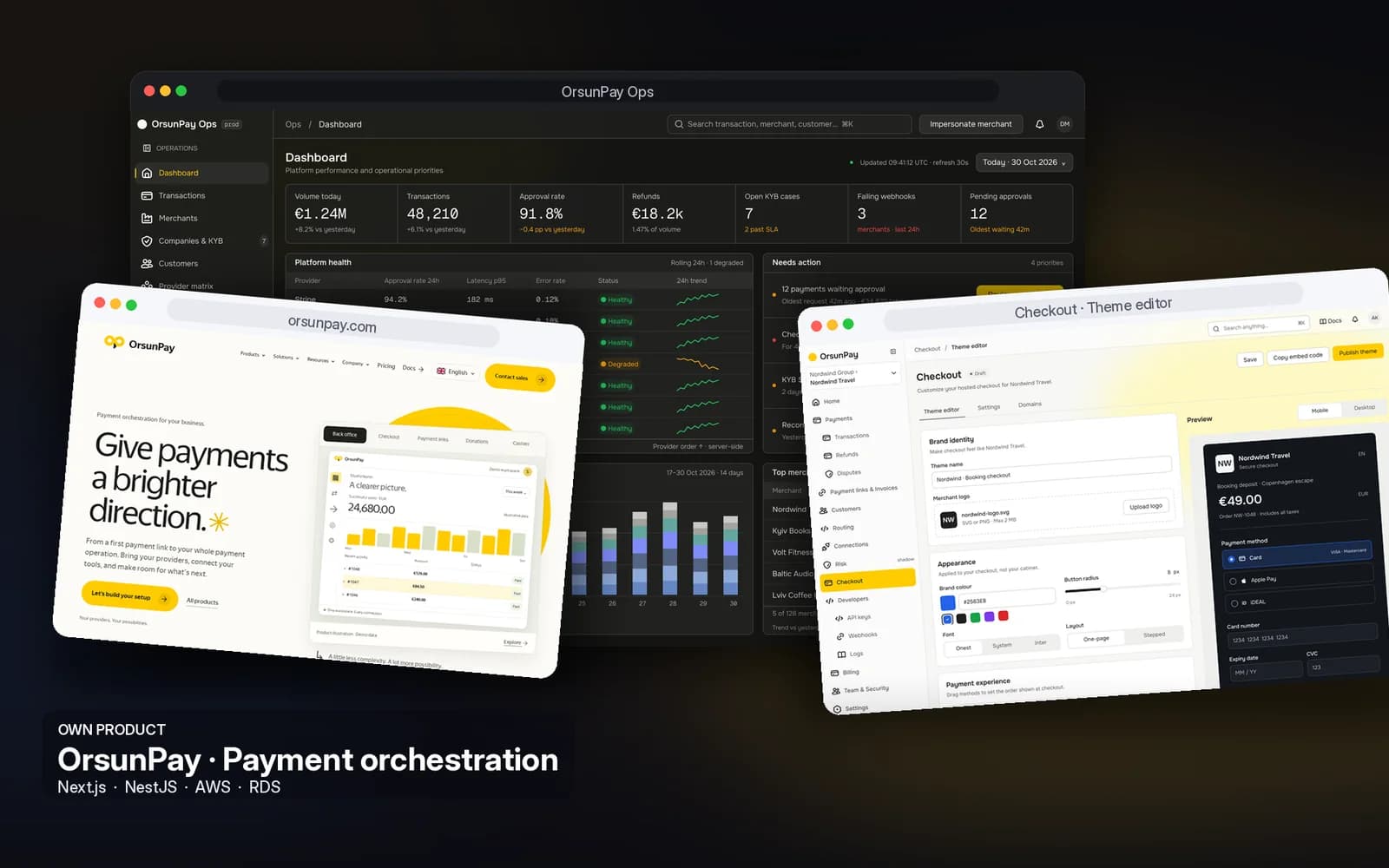
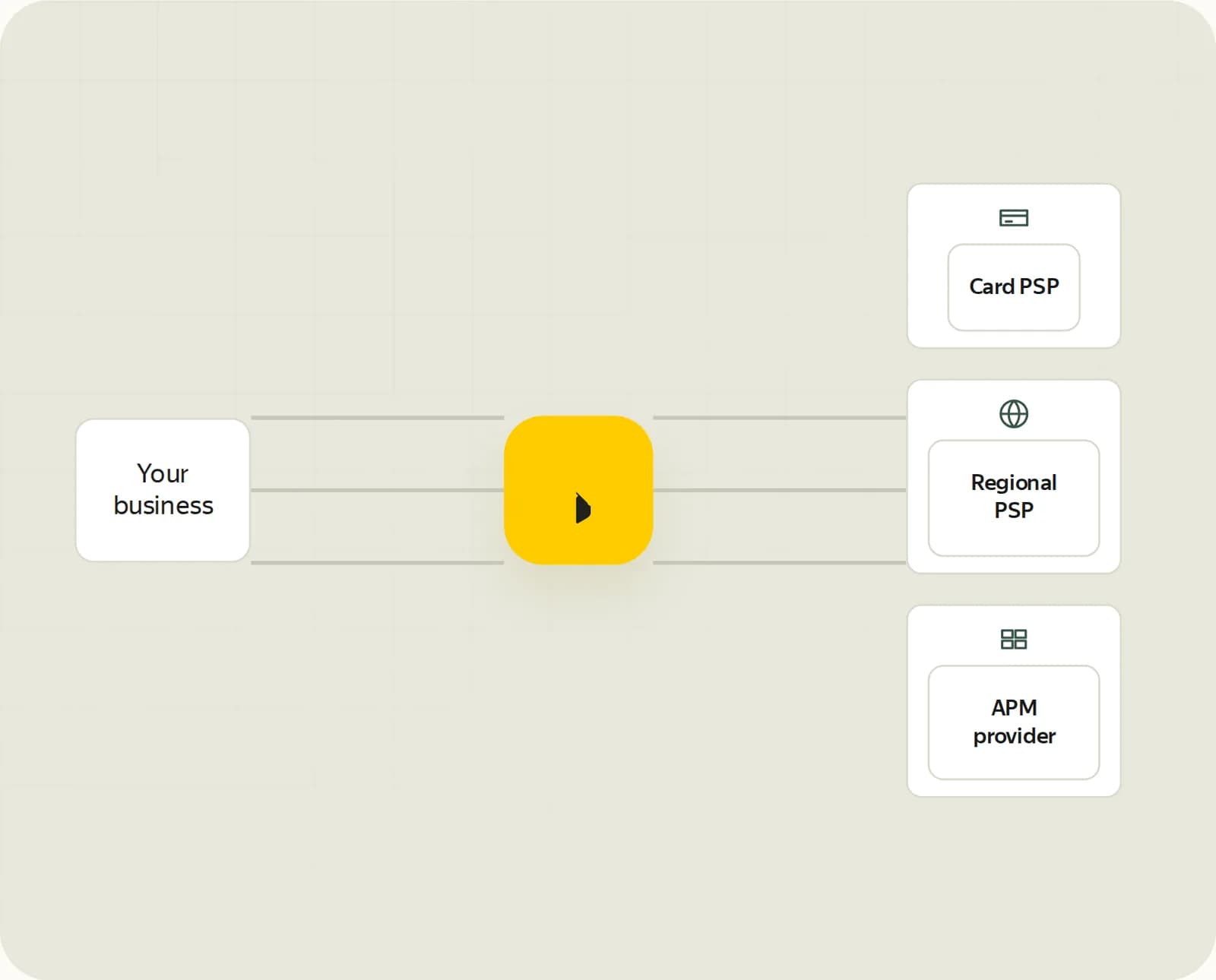
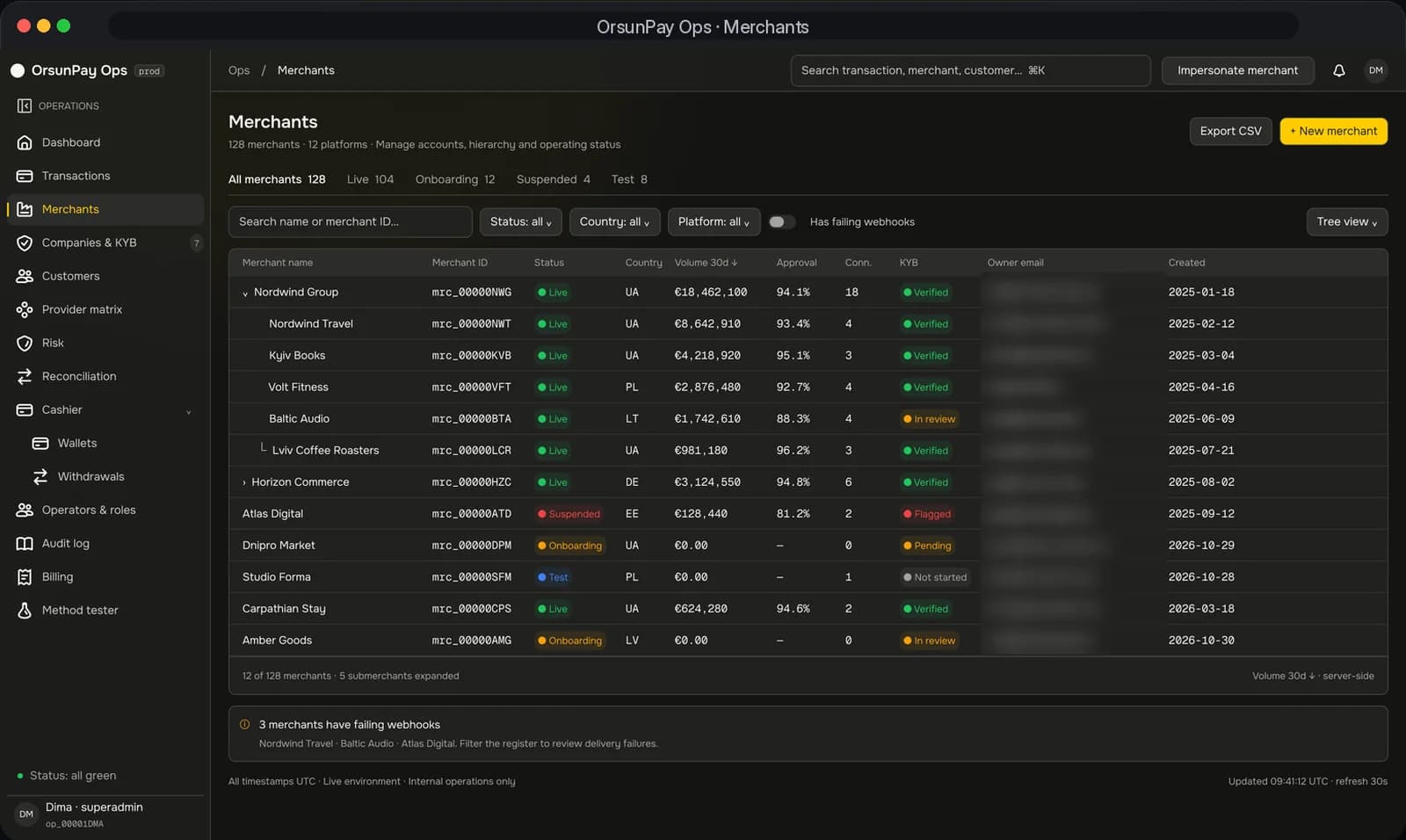
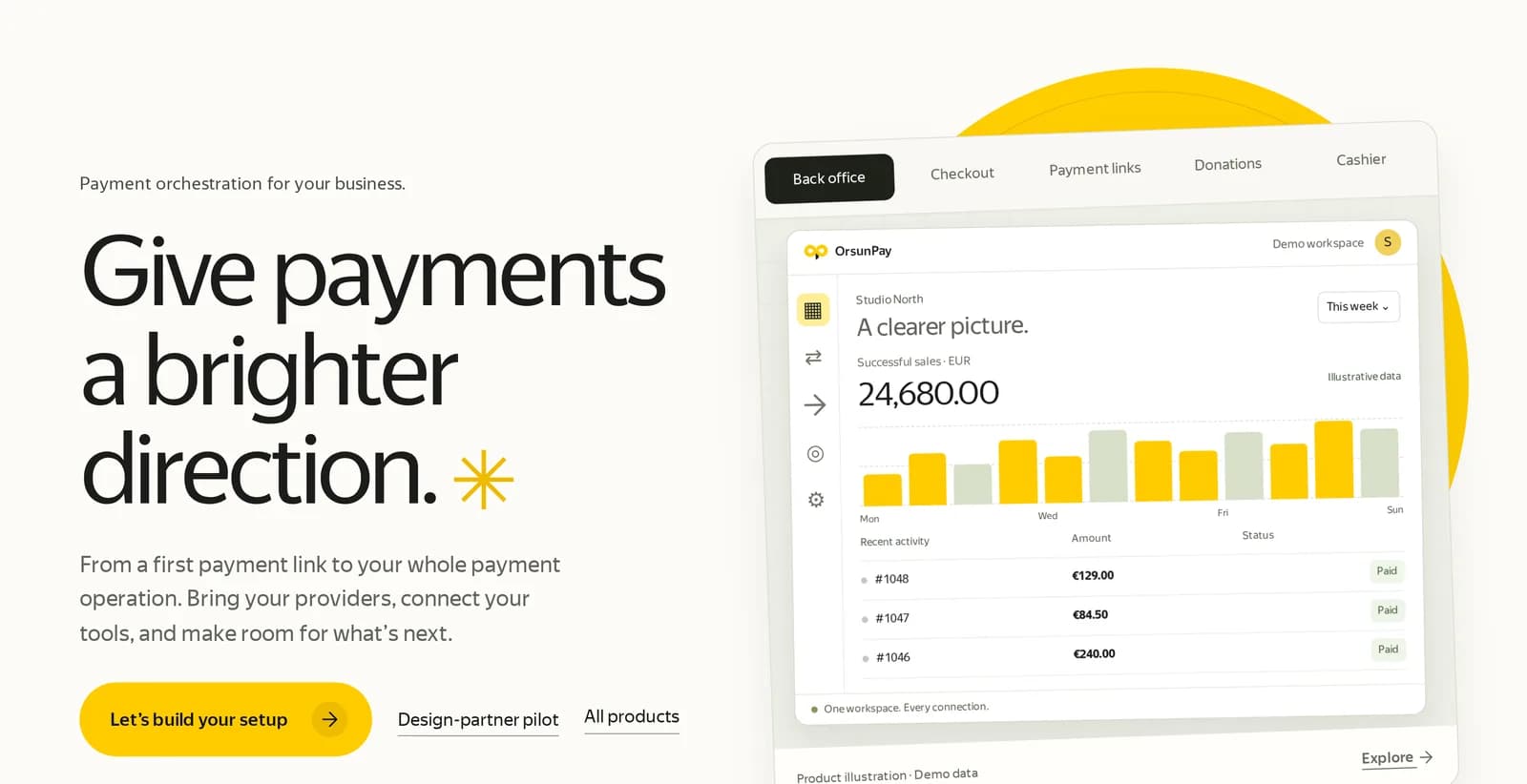
The public product site lists the modules we ship today: smart routing and cascading, provider connections, hosted checkout, payment links, a merchant cabinet with live registration, an operator back office, webhooks, and reporting. Behind those names sits a provider pool with 20+ PSPs, normalized webhooks back to the merchant system, and cabinets we have now built three times across product back offices.
Payment methods ride on whichever PSP wins the rule: OXXO in Mexico, Alipay for Germany, Wero, Bizum, and iDEAL are available when the connected provider supports them. Stripe, Adyen, and Worldpay are among the processors we connect in production. Card entry stays on provider-hosted fields; orchestration tracks transaction state and routing outcomes, not card data.
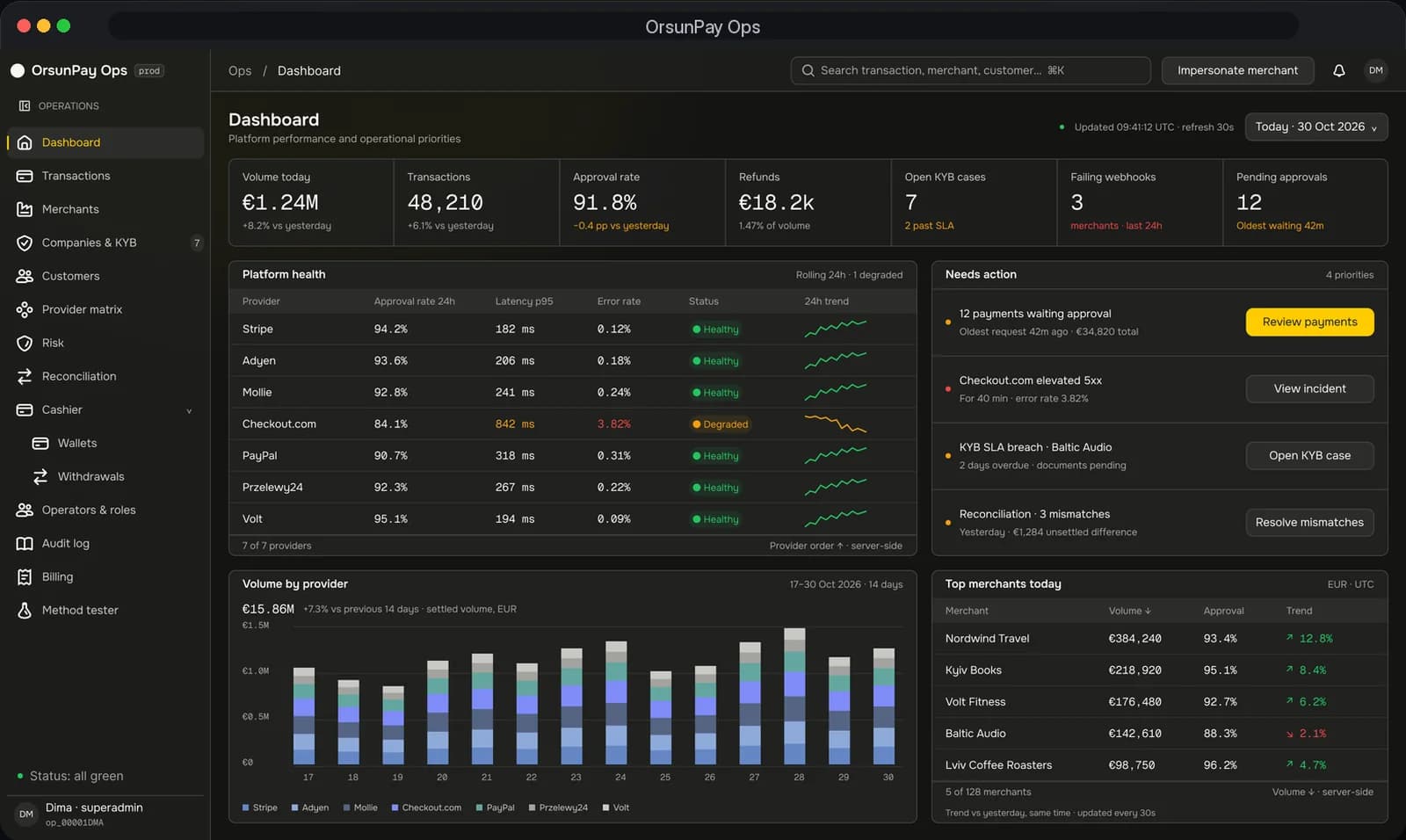
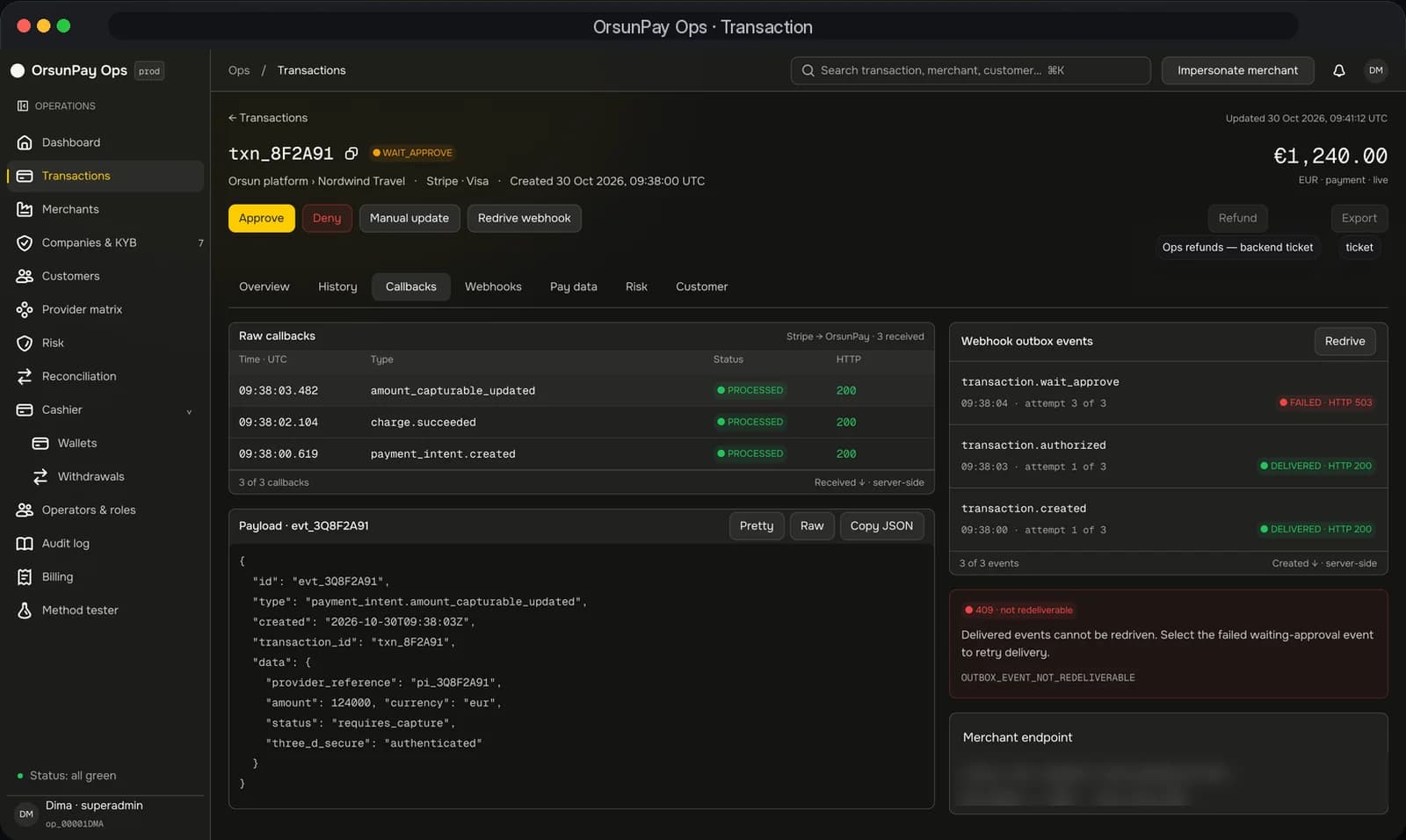
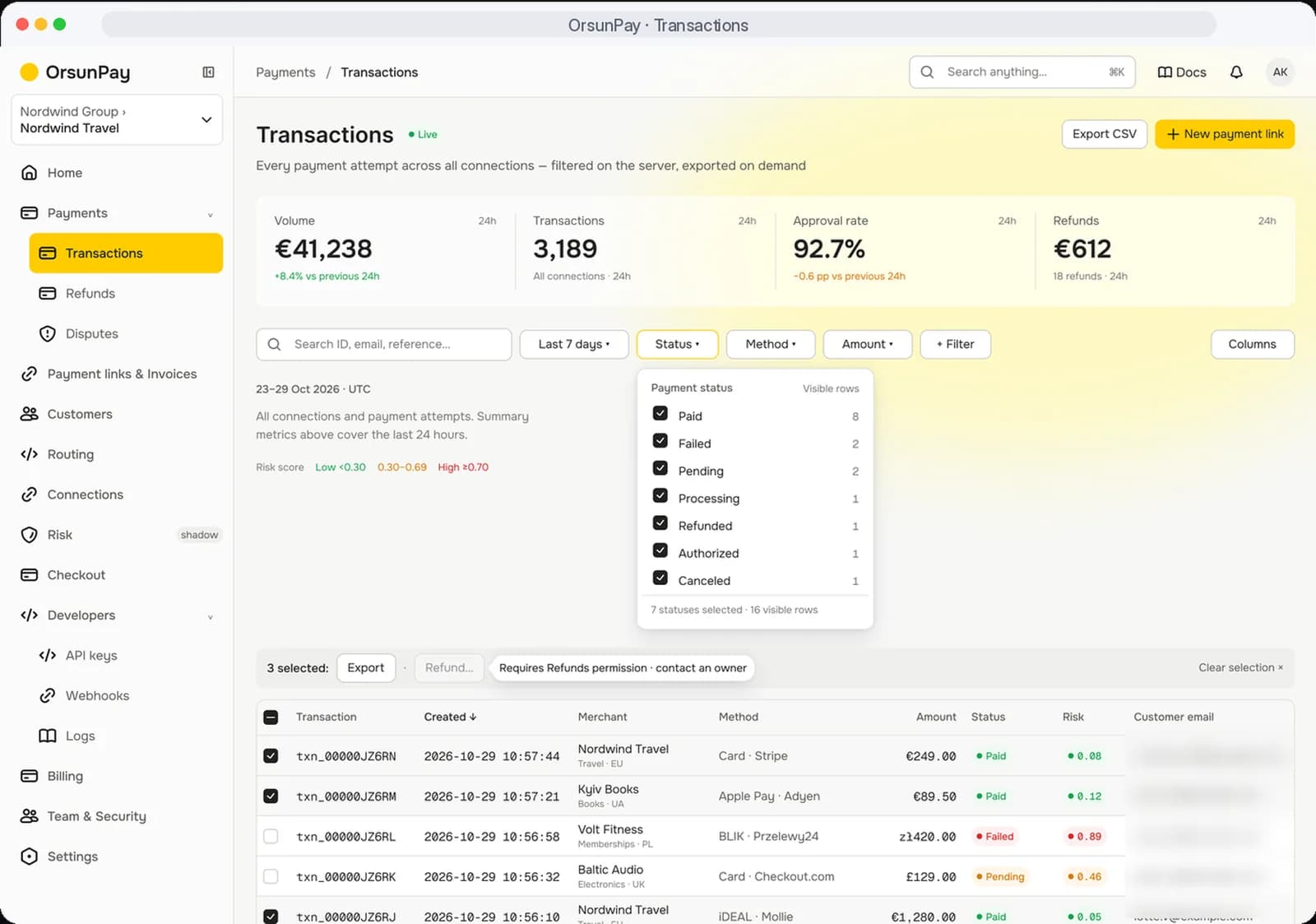
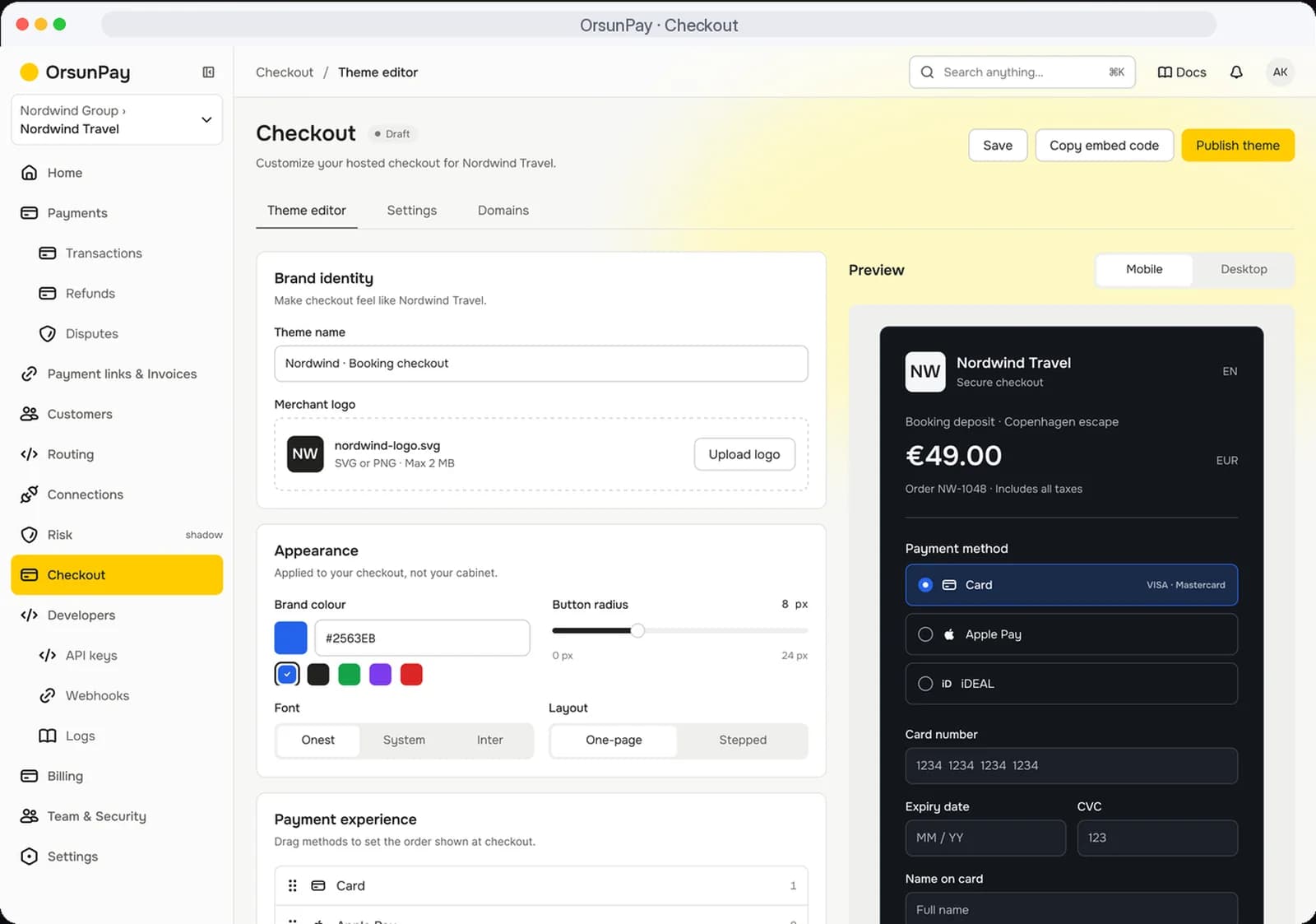
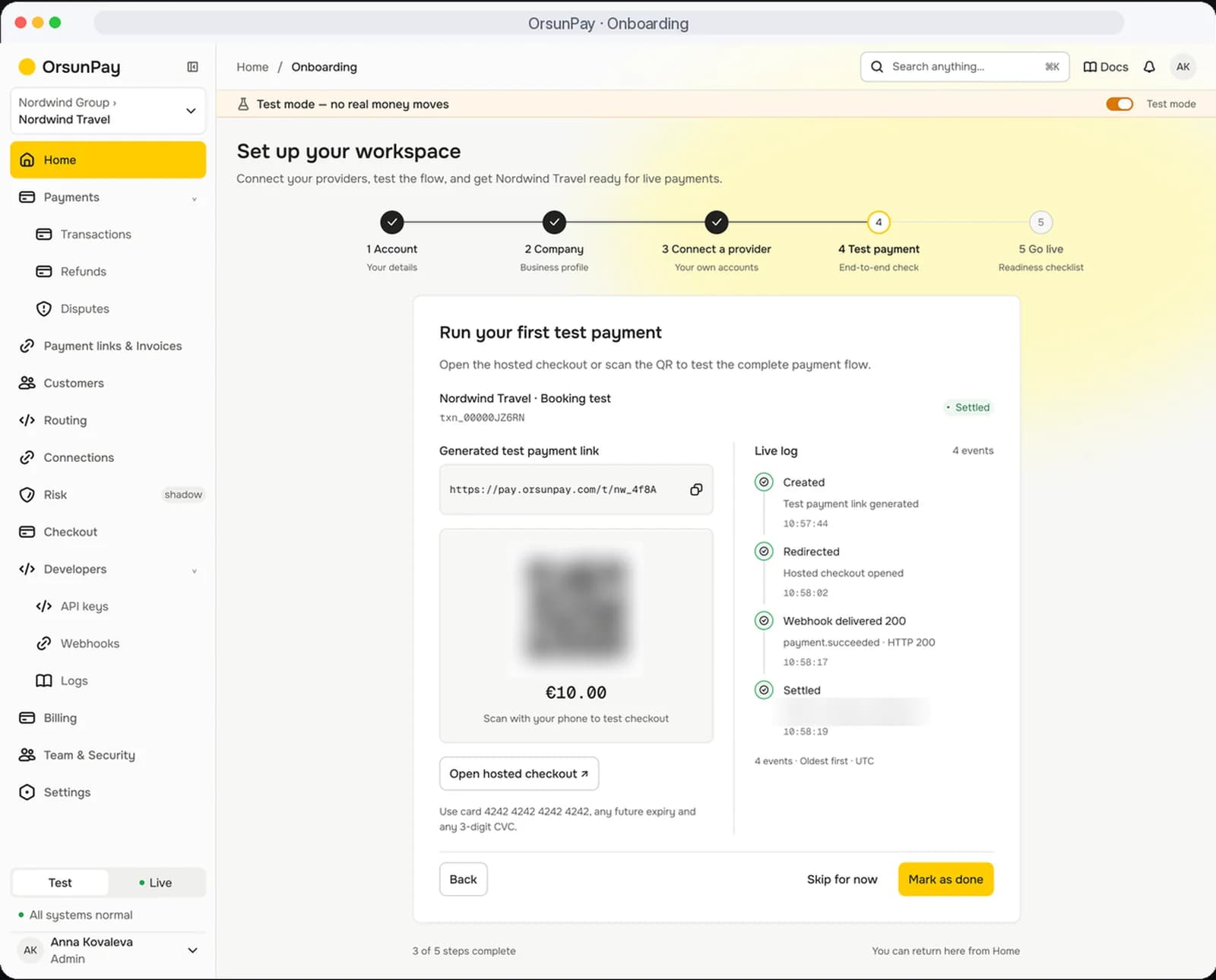
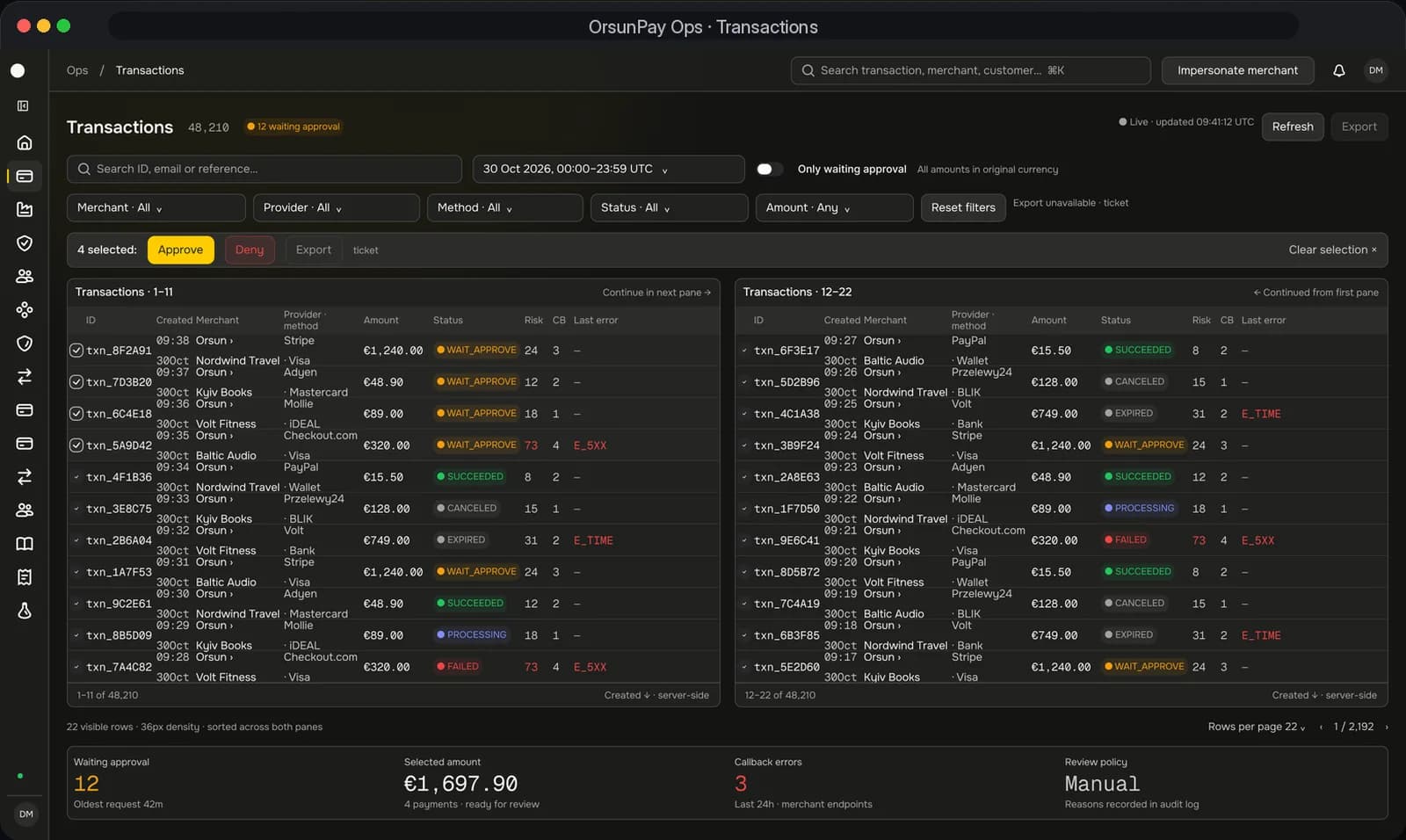
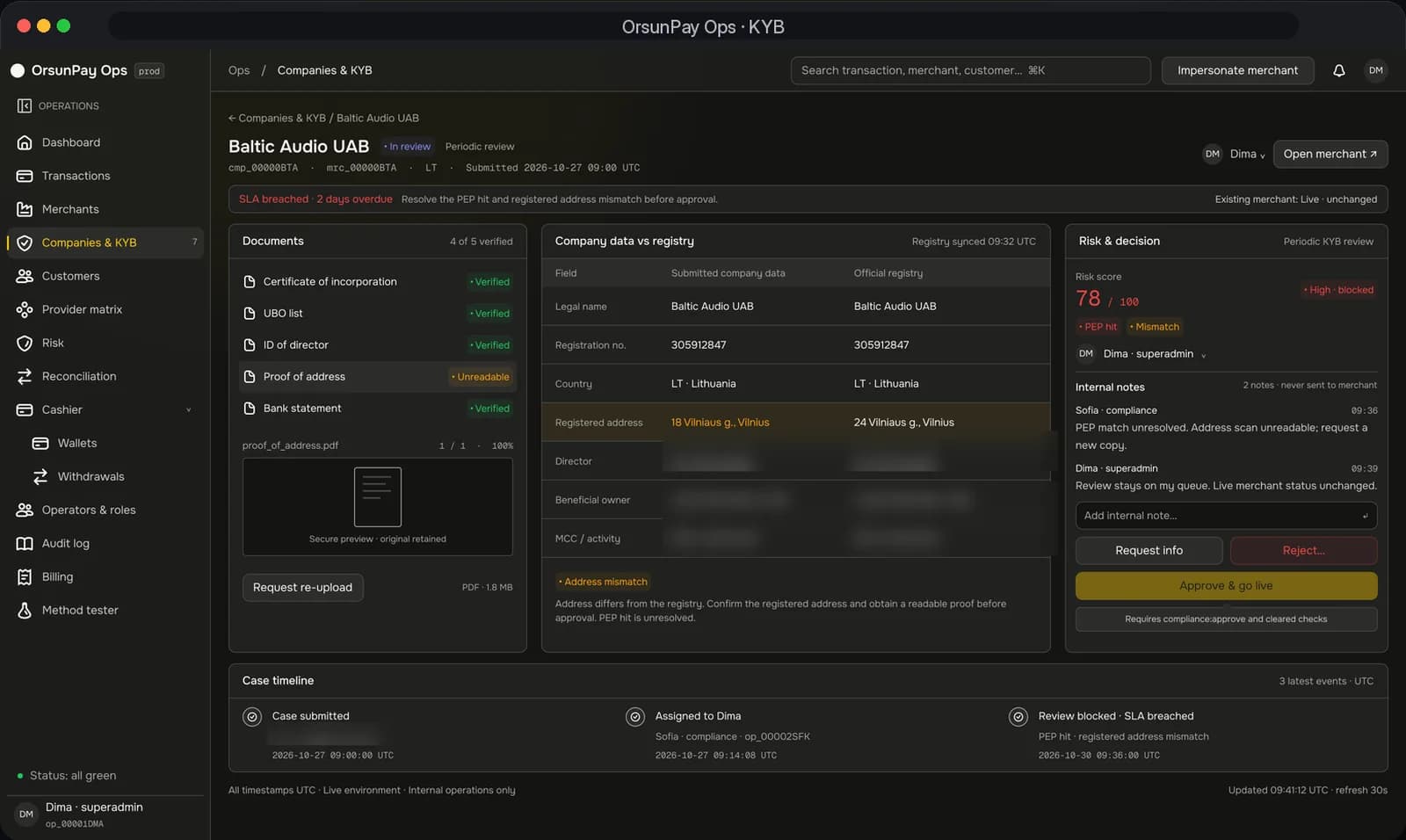
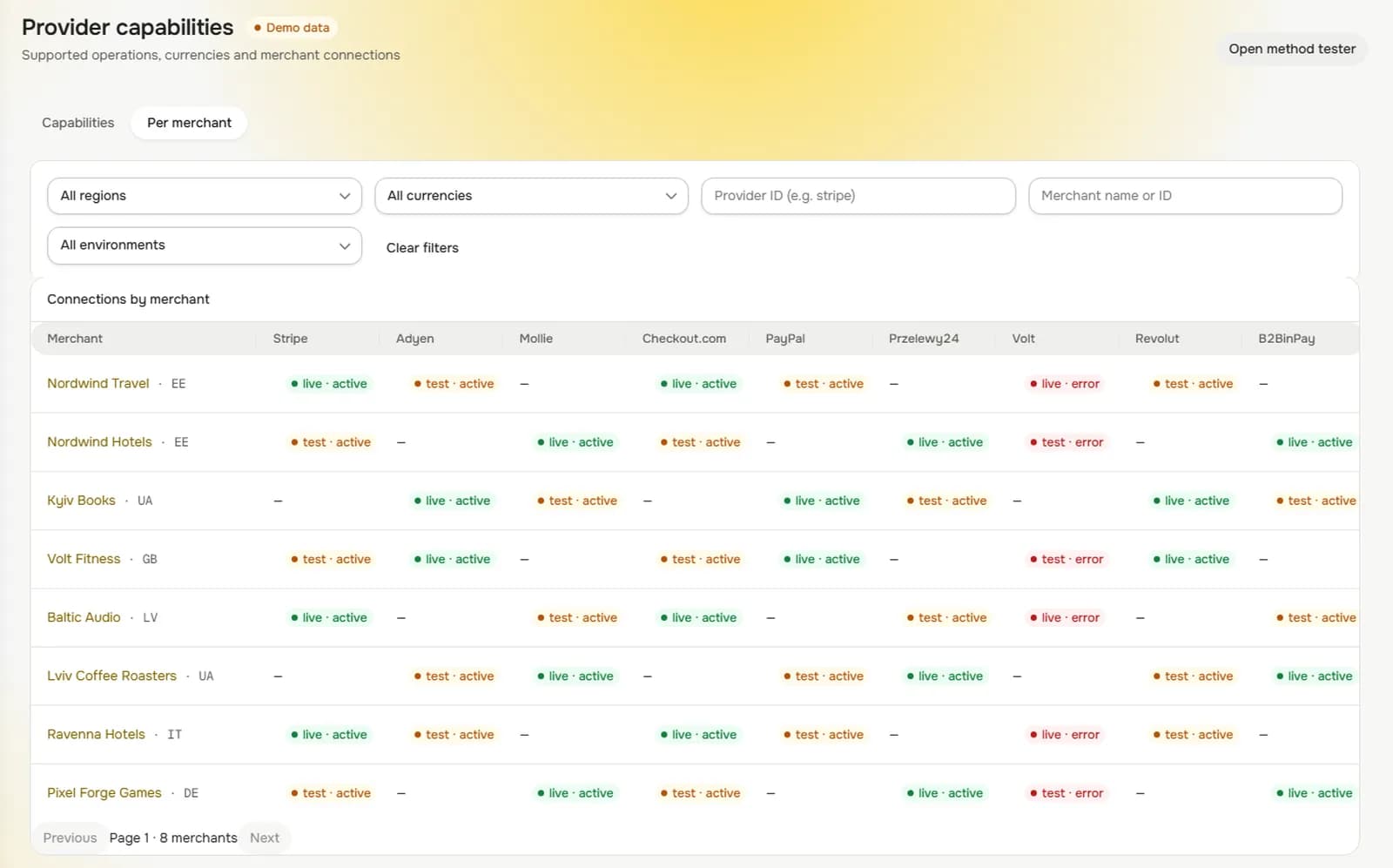
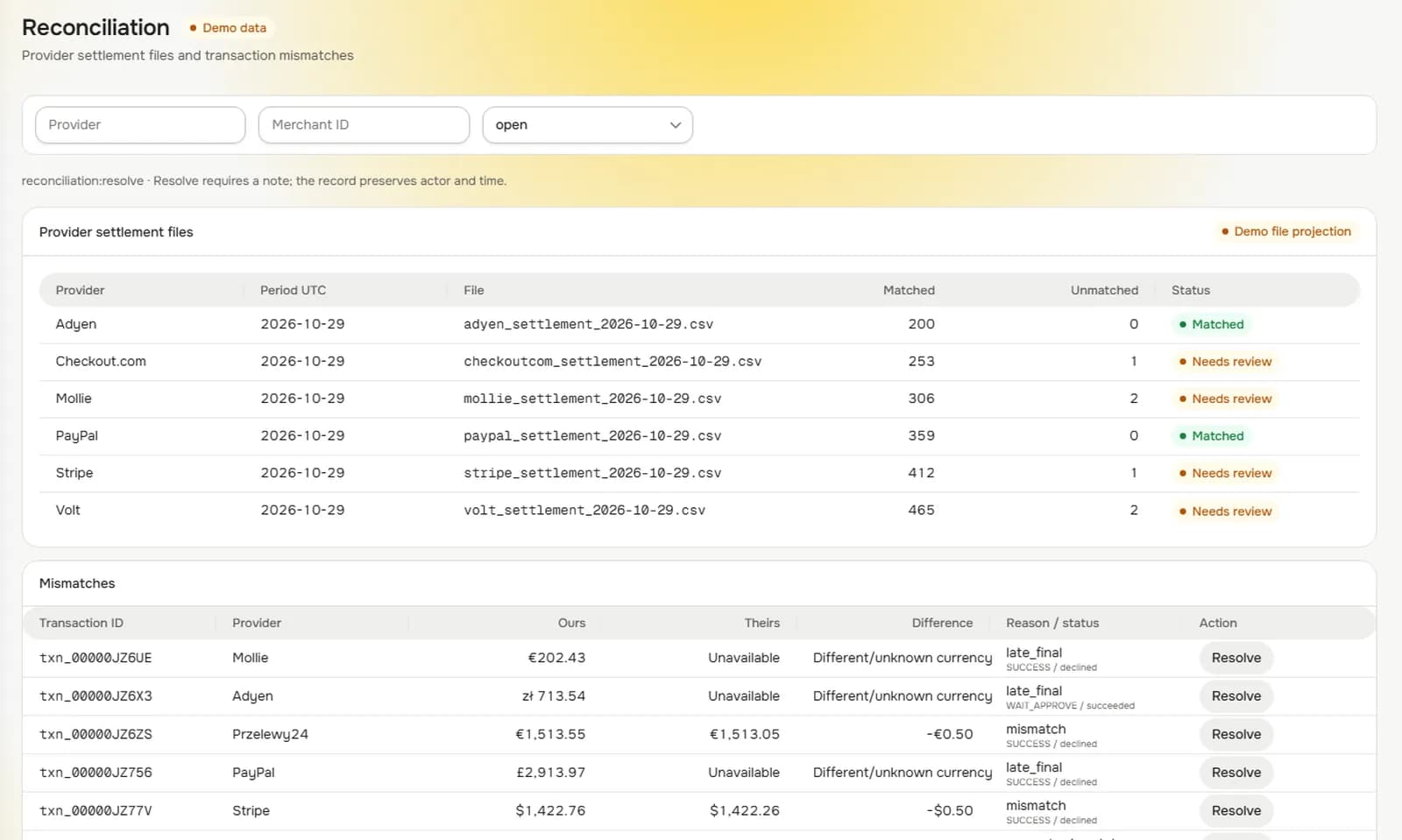
The operator back office includes a dashboard, transaction approval, PSP callback and webhook redelivery views, merchant hierarchy and KYB review, reconciliation of provider settlement files against transactions, merchant onboarding with a test payment, and a checkout theme editor in the merchant cabinet. We run our own projects on a Next.js and NestJS stack on AWS with RDS, with AI-first automation in our internal delivery.
How routing and cascading work
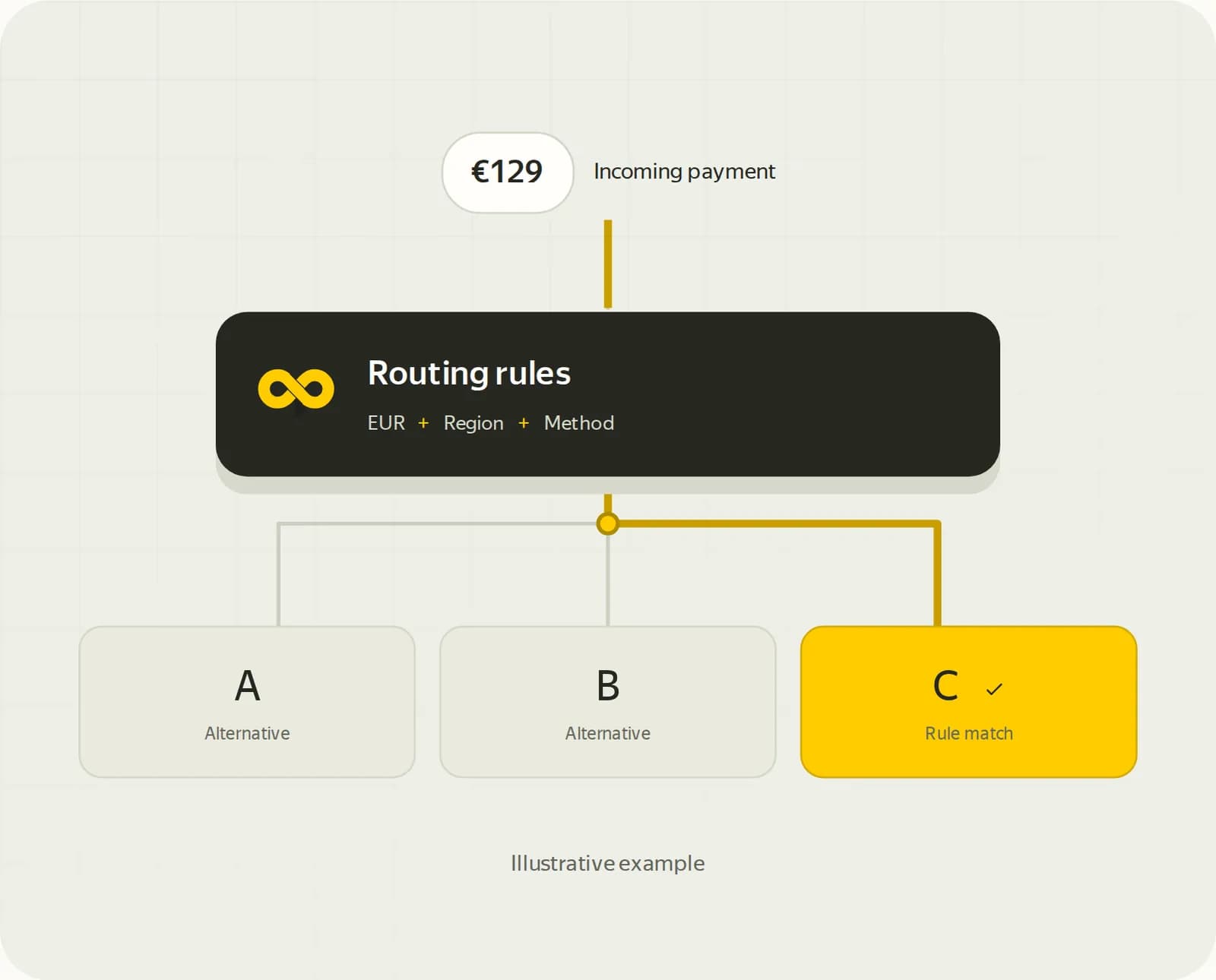
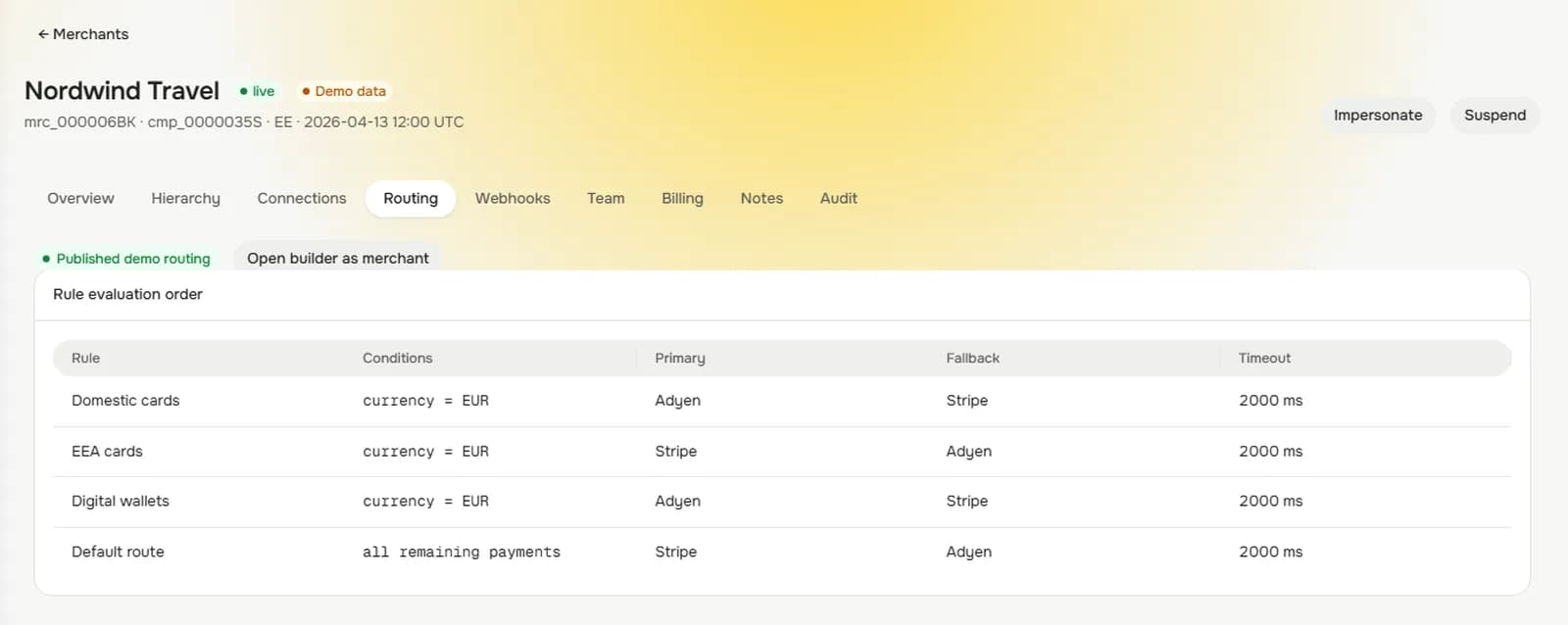
A typical capture starts at the merchant application or at OrsunPay hosted checkout. The merchant backend or our hosted page calls the orchestration API with amount, currency, payment method, and customer context. Rules evaluate in order: currency, region, method, and any merchant-specific filters choose a primary PSP path.
When the primary path returns an eligible soft decline, cascading can try a fallback PSP configured on the same rule, with safeguards when the outcome is ambiguous so you do not double-charge or lose auditability. PSP webhooks arrive in different shapes; we normalize them before forwarding to the merchant's webhook endpoint so ledgers and support tools see one event vocabulary. Operators can open a transaction to inspect raw PSP callbacks and retry webhook delivery when a merchant endpoint misses an event.
Funds still settle directly between the merchant and its PSPs. OrsunPay routes instructions and reconciles status; it is not a licensed payment institution. That boundary matters for PCI scope too: we keep card entry on the provider wherever possible.
Product screens
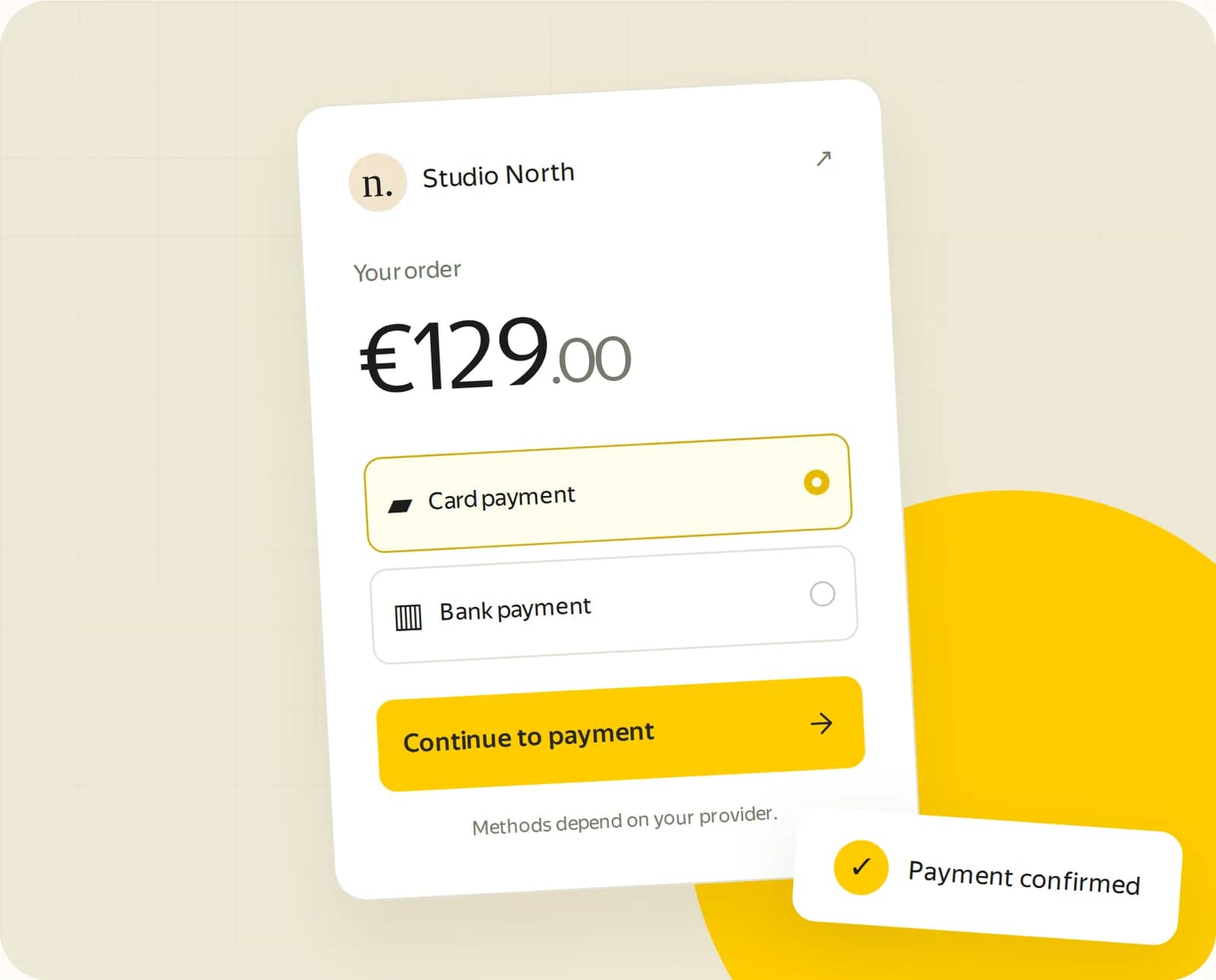
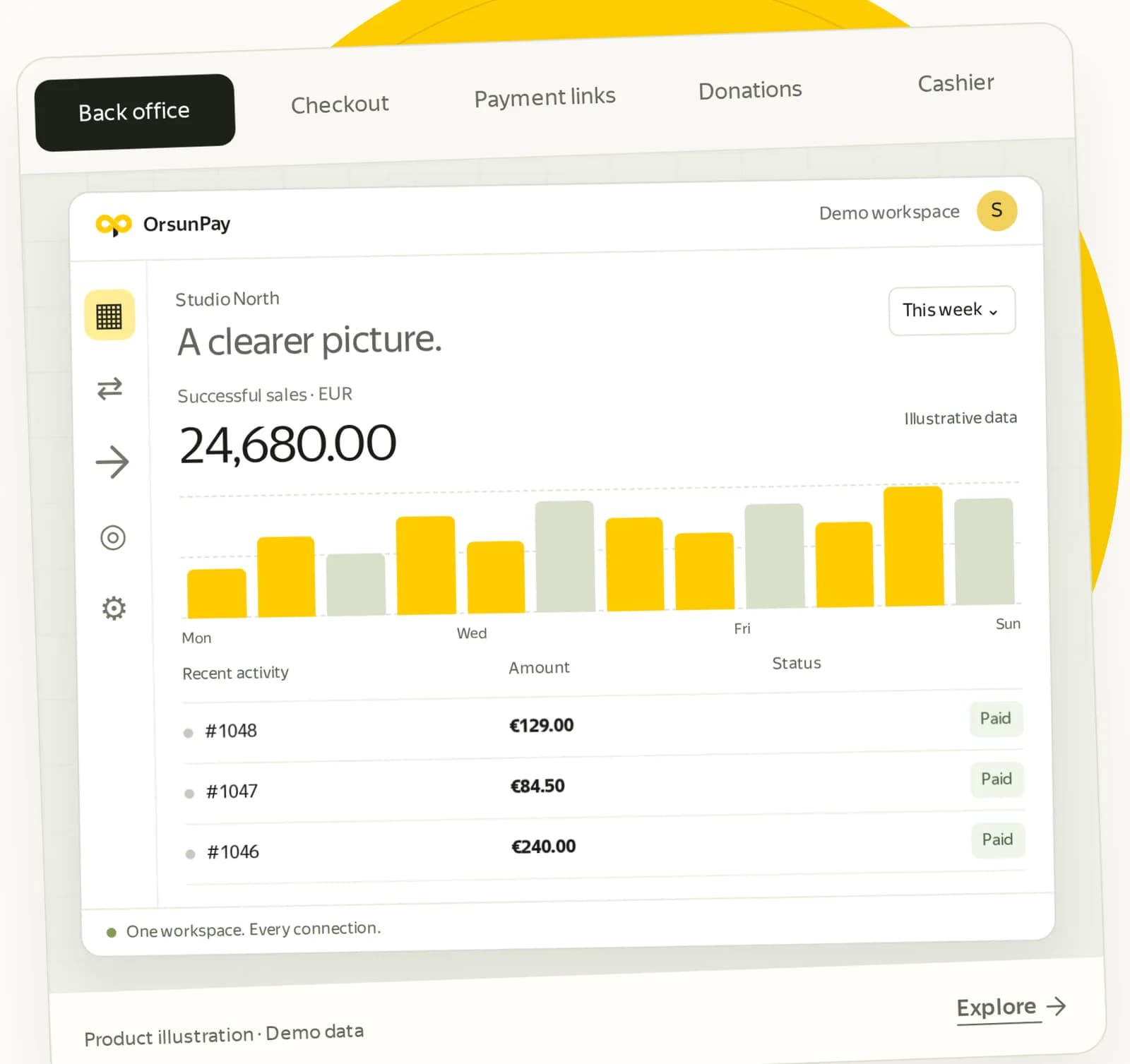
Hosted checkout shows the shopper-facing flow with card and bank methods, all rendered through connected providers. Cabinet screenshots on this page show operator and merchant views alongside the public marketing site.
Where OrsunPay is today
OrsunPay is live with registration and a merchant cabinet. Smart routing, retries, and cascading run in production. The provider pool lists 20+ PSPs, and we stay connected to Stripe, Adyen, and Worldpay.
If you already have PSP contracts, the free bring-your-own-PSP pilot on the OrsunPay site includes smart routing and cascading so you can test rules against your own processors without migrating everything on day one.
RiskCogs ships as the anti-fraud module inside the OrsunPay product family. Fraud scoring beside checkout is documented on the OrsunPay site and in our RiskCogs case study on this site.
How this shows up in our consulting
On payment orchestration consulting we still start from your routing, retry, and reconciliation requirements and end in a decision memo. We recommend providers for the client's task, including competitors of our own products. When OrsunPay fits the rule model and integration style, we say so; when a PSP-native router or another orchestrator fits better, we document that reasoning on paper instead of assuming a single vendor.
Implementation — whether on OrsunPay, a commercial orchestrator, or custom services — is a separate scoped project. The consulting engagement delivers specs and memos your team can implement or hand to another vendor. Related work includes payment integration consulting and PSP selection when you are still choosing acquirers.
We have production integration experience across major PSPs; the payment integrations experience note on this site describes that field context.
Questions about this practice
Related services and insights

Describe your problem
An independent technical answer for a round, an acquisition, or a decision you cannot delegate.
Limited to 3–5 engagements per quarter. Senior people on every engagement.
How an engagement runs
- First callYou describe the problem in your own words. We say whether we are the right people for it.
- Written scopeOne document with the outcome and the fee. Nothing starts until you have agreed to it.
- The workEach step ends in an artefact you can read and forward: a map, a memo, a plan.
- HandoverWe walk your team through the result and leave the documents with you.